Student Weekly Schedule: A Guide for Martial Arts Students
Master your student weekly schedule to balance martial arts training, academics, and personal growth. Expert tips for effective time management.
- By
- RankPill
- Published
- August 2, 2026
- Reading time
- 12 min read

Creating a comprehensive student weekly schedule becomes essential when balancing the demands of academic coursework with the physical and mental commitment required for martial arts training. Students who train regularly at martial arts academies face unique scheduling challenges that differ from traditional extracurricular activities. The discipline learned on the mat translates directly to time management skills, but only when students develop a structured approach to organizing their week. This guide explores effective strategies for building a student weekly schedule that accommodates training sessions, academic responsibilities, and personal wellness.
Understanding the Martial Arts Student's Unique Scheduling Needs
Martial arts students encounter distinct time management challenges that require thoughtful planning. Unlike club sports with seasonal schedules, disciplines such as Brazilian Jiu-Jitsu, karate, and judo typically operate year-round with multiple weekly training opportunities.
The physical intensity of martial arts training demands adequate recovery time between sessions. Students cannot simply stack back-to-back commitments without considering their body's need for rest and muscle repair. This biological reality must inform scheduling decisions.
Training Frequency and Academic Balance
Most martial arts academies recommend students train two to four times weekly for optimal progress. This frequency allows skill development while preventing burnout and overtraining injuries.
Key considerations for training frequency include:
- Belt rank requirements and testing preparation timelines
- Competition season demands for competitive students
- Private lesson scheduling for accelerated learning
- Open mat sessions for technique refinement
- Conditioning classes that complement regular training
The University of Waterloo's Student Success Office emphasizes the importance of creating schedules that realistically accommodate all commitments, not just ideal scenarios.

Building Your Foundation: Time Audit and Priority Assessment
Before creating a student weekly schedule, conduct a thorough time audit to understand current commitments. This assessment reveals hidden time drains and scheduling inefficiencies that undermine productivity.
Start by tracking every activity for one complete week. Document class times, training sessions, study periods, meals, transportation, and leisure activities. This raw data provides the foundation for informed scheduling decisions.
Categorizing Your Commitments
Organize activities into fixed and flexible categories to identify scheduling constraints and opportunities.
| Category Type | Examples | Scheduling Flexibility |
|---|---|---|
| Fixed Academic | Lectures, labs, seminars | None - must attend |
| Fixed Training | Scheduled classes, private lessons | Limited - preset times |
| Flexible Academic | Study sessions, assignments, projects | High - self-directed |
| Flexible Training | Open mat, conditioning, technique review | High - optional timing |
| Personal Care | Sleep, meals, recovery | Medium - adjustable within limits |
This categorization helps identify which commitments anchor your schedule and where adjustment opportunities exist. Carnegie Mellon University's Academic Success Center recommends starting with non-negotiable commitments when building effective schedules.
Strategic Time Blocking for Martial Arts Students
Time blocking transforms abstract intentions into concrete action plans. This technique assigns specific time slots to particular activities, reducing decision fatigue and increasing follow-through rates.
For martial arts students, effective time blocking requires acknowledging energy fluctuations throughout the day and week. Physical training depletes energy reserves differently than academic work, necessitating strategic scheduling.
Peak Performance Windows
Morning blocks (6:00 AM - 9:00 AM):
- Ideal for conditioning workouts before classes
- Mental clarity supports technical study and memorization
- Lower academy crowding at early sessions
Midday blocks (12:00 PM - 2:00 PM):
- Natural energy dip benefits from physical activity
- Break from cognitive work refreshes focus
- Convenient for nearby academy locations
Evening blocks (5:00 PM - 9:00 PM):
- Most popular training times with diverse partners
- Post-class relaxation when no homework follows
- Social connections strengthen training commitment
The student weekly schedule should align training with natural energy patterns while accommodating fixed academic obligations. Oregon State University's Academic Success Center provides additional strategies for optimizing daily energy management.

Integrating Technology and Systems
Modern scheduling challenges demand modern solutions. Digital tools streamline the student weekly schedule creation process and provide dynamic adjustment capabilities that paper planners cannot match.
Academy management platforms like MatSync enable students to view class schedules, track attendance, and monitor their progress toward belt advancement. This centralized information reduces scheduling conflicts and helps students plan their training around academic commitments.
Digital Calendar Strategies
Effective digital calendar management relies on consistent practices and clear organizational systems. Color-coding different commitment types creates instant visual recognition of schedule composition.
Recommended color coding system:
- Academic classes (blue)
- Study blocks (light blue)
- Martial arts training (red)
- Personal time (green)
- Meals and transitions (yellow)
- Sleep and recovery (purple)
Study Horizon's weekly reset routine emphasizes regular schedule reviews to maintain alignment with evolving priorities and deadlines.
Managing Peak Academic Periods
The student weekly schedule requires flexibility to accommodate examination periods, project deadlines, and belt testing preparation. These high-pressure intervals demand temporary schedule adjustments without completely abandoning training commitments.
Many martial arts students make the mistake of completely stopping training during finals week. This approach eliminates a crucial stress management outlet precisely when students need it most.
Scaling Training During Intense Periods
Rather than elimination, consider scaling training frequency and intensity during academically demanding weeks. A modified approach maintains consistency while acknowledging competing priorities.
| Period Type | Regular Schedule | Modified Schedule |
|---|---|---|
| Normal weeks | 4 training sessions | 4 training sessions |
| Minor exams | 4 training sessions | 3 training sessions |
| Midterm weeks | 4 training sessions | 2-3 training sessions (technique focus) |
| Finals weeks | 4 training sessions | 1-2 training sessions (light drilling) |
| Project deadlines | 4 training sessions | 3 training sessions (shorter duration) |
The University of Washington's time management guidance emphasizes maintaining routines during stressful periods rather than abandoning beneficial habits.
Recovery and Injury Prevention Scheduling
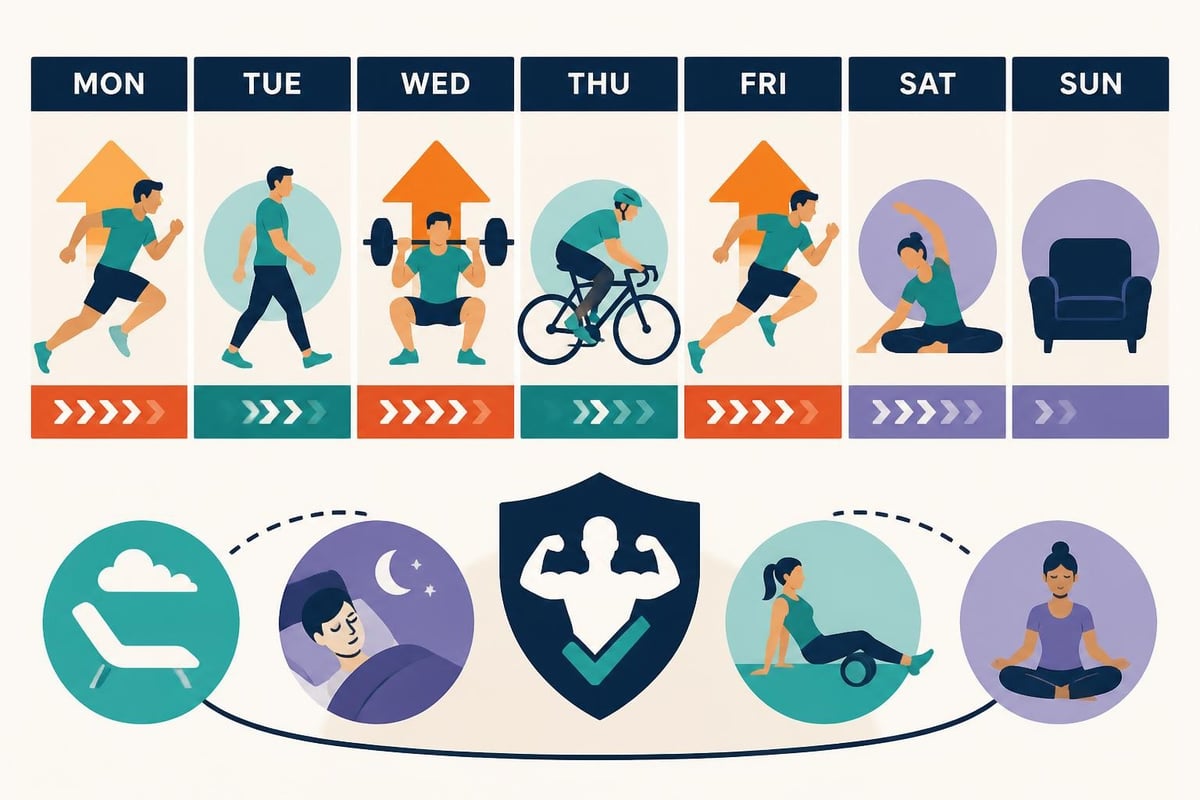
Physical recovery represents a non-negotiable component of sustainable martial arts training. The student weekly schedule must incorporate adequate rest between intense training sessions to prevent overuse injuries and maintain academic performance.
Sleep requirements increase for students engaged in regular physical training. While general recommendations suggest seven to nine hours nightly, martial arts students may need additional sleep during intense training phases or competition preparation.
Building Recovery Into Your Schedule
Strategic recovery scheduling prevents the cumulative fatigue that leads to injury and academic decline. Recovery encompasses more than sleep, including active recovery, nutrition timing, and stress management.
Essential recovery elements:
- Minimum 8 hours sleep on training nights
- 48-hour recovery between intense sessions targeting the same muscle groups
- Proper post-training nutrition within 30 minutes of session completion
- Active recovery activities on rest days (walking, stretching, light yoga)
- Complete rest days (at least one weekly)
Academy platforms that track attendance patterns help students recognize when training frequency exceeds recovery capacity. Reviewing training data within a comprehensive dashboard system provides objective insights into scheduling sustainability.
Weekly Planning Rituals
Consistent weekly planning rituals transform scheduling from a reactive scramble into a proactive practice. Dedicating time each week to schedule review and adjustment maintains alignment between commitments and priorities.
Sunday evening represents an ideal planning window for most students. This timing allows weekend recovery while providing adequate preparation for the week ahead.
The Weekly Planning Process
Effective weekly planning follows a structured sequence:
- Review the previous week's schedule adherence and challenges
- Input fixed commitments (classes, scheduled training sessions)
- Block study time based on upcoming deadlines and exam dates
- Schedule additional training sessions around energy and recovery needs
- Plan meals and preparation time
- Identify potential scheduling conflicts and develop backup plans
- Set specific goals for both academic and martial arts progress
McMaster University's time management resources recommend treating planning time as a non-negotiable appointment with yourself, not an optional activity completed when convenient.
Leveraging Academy Resources and Communication
Martial arts academies offer resources beyond mat time that support student scheduling success. Instructors understand the academic pressures students face and can provide guidance on balancing training with school commitments.
Open communication with instructors about your student weekly schedule allows them to offer personalized advice. Many instructors have navigated similar challenges and can recommend specific training approaches during academically demanding periods.
Making the Most of Academy Flexibility
Modern martial arts academies typically offer multiple class times for each belt level and discipline. This flexibility enables students to shift training times based on weekly academic demands.
Students training in disciplines like MMA or kickboxing benefit from cross-training opportunities that provide schedule variety while developing complementary skills.
Maximizing academy scheduling flexibility:
- Attend different class times each week based on academic load
- Use makeup classes when schedule conflicts arise
- Participate in open mat sessions for additional flexible training
- Schedule private lessons during less academically intense periods
- Communicate schedule changes to training partners for drilling consistency
Adapting Your Schedule Throughout the Semester
The student weekly schedule should evolve as the semester progresses and priorities shift. A static schedule created in week one rarely serves students well in week twelve when final projects and belt testing coincide.
Regular schedule audits identify when current plans no longer align with reality. Rather than viewing schedule changes as failures, recognize adaptation as a sign of responsive planning.
Semester-Long Schedule Evolution
Different academic periods require different scheduling approaches. Understanding these patterns enables proactive adjustment rather than reactive crisis management.
Early semester (weeks 1-4): Establish routines, maximize training frequency, build study habits, and create sustainable patterns before academic pressure intensifies.
Mid-semester (weeks 5-10): Maintain established patterns, adjust for midterm examinations, balance project deadlines with training commitments, and prevent cumulative fatigue through consistent recovery.
Late semester (weeks 11-16): Scale training thoughtfully, prioritize sleep and recovery, maintain minimum training frequency for stress management, and plan post-semester training intensification.
Coordination With Training Partners and Study Groups
The student weekly schedule rarely exists in isolation. Training partners and study group members create interdependencies that require coordination and communication.
Consistent training times help build relationships with specific training partners whose schedules align with yours. These partnerships enhance learning through familiarity and trust while creating accountability for schedule adherence.
Balancing Individual and Group Commitments
Study groups and training partnerships provide tremendous value but also introduce scheduling complexity. Finding overlap between multiple people's calendars requires flexibility and advance planning.
| Commitment Type | Scheduling Approach | Communication Needs |
|---|---|---|
| Solo study | High flexibility | None required |
| Study groups | Moderate flexibility | Weekly coordination |
| Regular training partners | Moderate flexibility | Advance notice for changes |
| Team competition prep | Low flexibility | Committed attendance |
Tools like student weekly planners facilitate coordination by making your availability visible to others and identifying optimal meeting times.
Nutrition and Meal Planning Integration
Adequate nutrition fuels both academic performance and martial arts training, yet meal planning often receives insufficient attention in the student weekly schedule. Strategic meal timing and preparation prevent energy crashes that undermine both studying and training effectiveness.
Training on an empty stomach reduces performance and increases injury risk. Conversely, training too soon after large meals causes discomfort and digestive issues. The student weekly schedule must account for proper meal timing around training sessions.
Strategic Meal Scheduling
Pre-training nutrition (2-3 hours before): Moderate meals with balanced carbohydrates and protein provide sustained energy without digestive discomfort during training.
Post-training nutrition (within 30 minutes): Protein and carbohydrate combinations support muscle recovery and replenish energy stores depleted during training.
Study session fuel: Light, frequent snacks maintain blood sugar stability during extended study blocks without causing energy crashes.
Batch cooking on weekends reduces daily meal preparation time, creating additional schedule flexibility during busy weekdays. This approach particularly benefits students balancing demanding academic programs with frequent training.
Transportation and Transition Time Reality
Unrealistic transition time estimates undermine even well-designed schedules. The student weekly schedule must account for actual transportation time between campus, home, and the academy, not idealized best-case scenarios.
Students frequently underestimate the time required to change for training, pack equipment, travel to the academy, and complete post-training showering and changing. These transitions often consume 30-60 minutes beyond actual training time.
Building Realistic Buffer Time
Essential transition buffers include:
- 15 minutes for pre-training preparation and equipment gathering
- Actual travel time plus 10 minutes for parking and unexpected delays
- 20 minutes post-training for showering and changing
- 10 minutes between consecutive commitments on campus
- 30 minutes for meal preparation and consumption
Creating realistic weekly schedules requires honest assessment of actual time requirements, not aspirational estimates that create chronic lateness and stress.
Maintaining Schedule Flexibility and Self-Compassion
Perfect schedule adherence represents an unrealistic goal that sets students up for disappointment and abandonment of planning efforts. The most effective student weekly schedule builds in flexibility for unexpected events, energy fluctuations, and occasional schedule deviations.
Life happens. Illness, family emergencies, unexpected academic demands, and simple exhaustion occasionally require schedule modifications. Rather than viewing these adjustments as failures, recognize them as normal aspects of sustainable time management.
The 80% Rule
Aim for 80% schedule adherence rather than perfection. This approach acknowledges reality while maintaining beneficial structure and routine. If you attend three of four planned training sessions and complete 80% of scheduled study blocks, you are succeeding, not failing.
Self-compassion during schedule disruptions prevents the all-or-nothing thinking that leads students to abandon planning entirely after a few missed commitments. Resume your schedule without self-judgment, learning from disruptions rather than dwelling on them.
Mastering your student weekly schedule requires ongoing refinement, honest self-assessment, and the willingness to adapt as circumstances change throughout the academic year. The discipline developed through martial arts training directly supports effective time management when applied to scheduling practices. For martial arts academy owners looking to better support their students' scheduling needs, MatSync provides comprehensive tools for managing class schedules, tracking student attendance patterns, and streamlining communication. These features help students integrate their training commitments into their broader weekly schedules while giving instructors visibility into attendance patterns that might indicate scheduling challenges.