Class Scheduling Software for Martial Arts Academies
Discover how class scheduling software streamlines martial arts academy operations, reduces conflicts, and enhances student experience in 2026.
- By
- RankPill
- Published
- May 22, 2026
- Reading time
- 11 min read

Managing a martial arts academy involves juggling multiple classes, instructors, belt levels, and student schedules throughout the week. Traditional paper-based systems or spreadsheets often lead to double bookings, instructor conflicts, and frustrated students who can't find the right class times. Modern class scheduling software transforms these operational challenges into streamlined processes, allowing academy owners to focus on what matters most: teaching martial arts and building a thriving community.
The Operational Challenges Facing Martial Arts Academies
Running a successful martial arts academy requires coordinating numerous moving parts simultaneously. Instructors teach multiple disciplines at various skill levels, students progress through belt ranks at different paces, and class capacity limits must be respected to maintain quality instruction.
Without proper systems, scheduling becomes a constant source of stress. Academy owners spend hours manually creating weekly schedules, only to discover conflicts when instructors request time off or classes reach capacity. Students struggle to find appropriate classes for their skill level, leading to frustration and potentially lost memberships.
Common Scheduling Pain Points
Martial arts academies face unique scheduling challenges that differ from traditional fitness centers or educational institutions:
- Belt rank segregation: Ensuring beginners don't end up in advanced classes
- Instructor specialization: Matching qualified instructors to specific disciplines
- Capacity management: Preventing overcrowding while maximizing mat space utilization
- Family scheduling: Coordinating multiple family members across different programs
- Trial class integration: Seamlessly adding prospective students to appropriate introductory sessions
These complexities multiply as academies grow, making manual scheduling increasingly unsustainable. Best practices for fitness scheduling emphasize the importance of systematic approaches to maximize attendance and member retention.
Core Features of Effective Class Scheduling Software
The right class scheduling software addresses martial arts academy needs through specialized functionality. Understanding which features deliver the most value helps academy owners make informed decisions.
Automated Conflict Detection
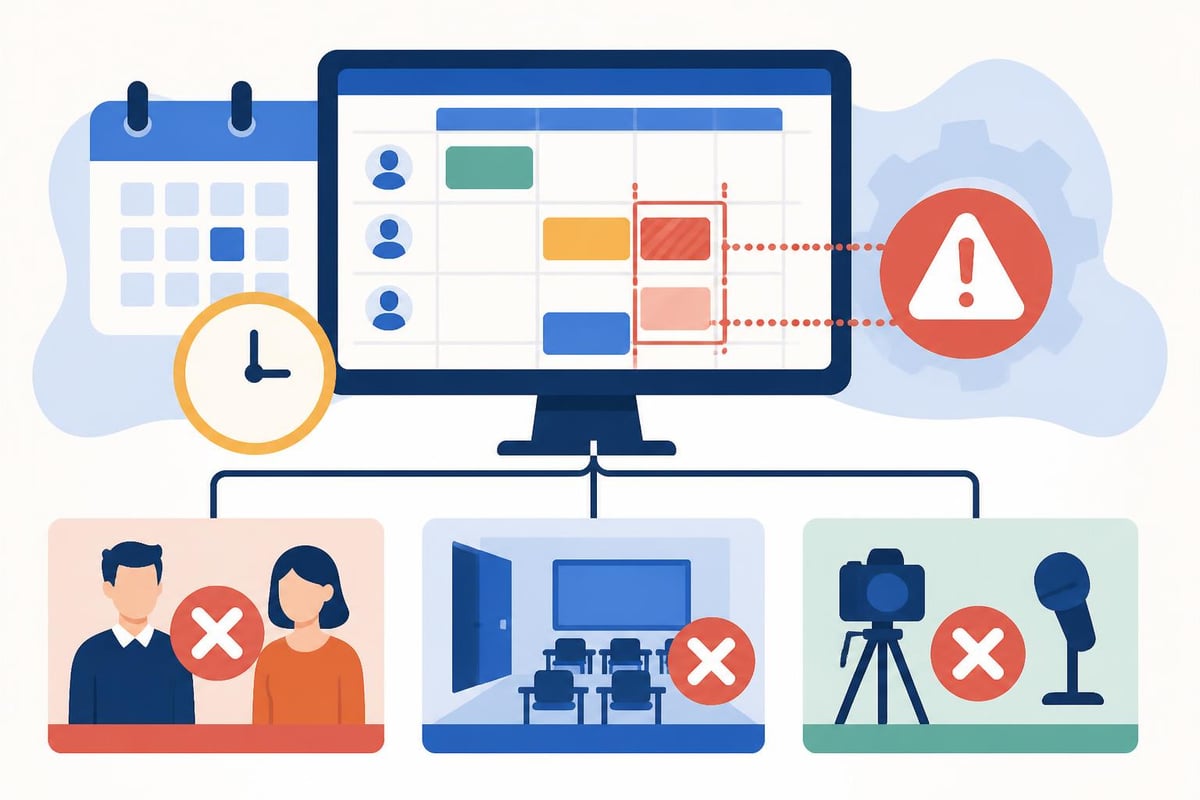
Class scheduling software automatically identifies and prevents double bookings before they occur. The system checks instructor availability, room assignments, and equipment requirements in real time, flagging potential conflicts immediately.
For martial arts academies offering Brazilian Jiu-Jitsu, Muay Thai, and MMA simultaneously, this feature becomes essential. Different disciplines require different mat configurations and equipment, making conflict-free scheduling critical.
Skill Level and Belt Rank Management
Unlike generic scheduling tools, specialized platforms accommodate martial arts progression systems. The software tracks each student's belt rank and automatically suggests appropriate classes based on their skill level.
This functionality prevents beginners from accidentally enrolling in advanced sessions where they might feel overwhelmed or face safety risks. It also helps instructors maintain consistent class composition, enabling more effective teaching.
| Feature | Generic Scheduling | Martial Arts-Specific |
|---|---|---|
| Belt rank tracking | Not available | Integrated system |
| Skill-based recommendations | Basic grouping | Automated matching |
| Progression monitoring | Manual tracking | Automated updates |
| Class prerequisites | Limited support | Full enforcement |
Instructor Assignment and Qualification Matching
Quality instruction requires matching the right instructor to each class. Class scheduling software maintains instructor profiles with certifications, specializations, and availability preferences.
When creating schedules for karate classes versus boxing sessions, the system automatically suggests qualified instructors. This prevents situations where instructors teach outside their expertise, maintaining program quality and student safety.
Maximizing Mat Space and Resource Utilization
Martial arts academies operate within physical constraints. Mat space, changing rooms, and equipment represent significant investments that must be utilized efficiently to maximize revenue potential.
Capacity Optimization Strategies
Class scheduling software provides analytics showing which time slots have excess capacity and which consistently fill to maximum. This data-driven approach enables academy owners to make strategic decisions about class offerings.
Instead of guessing which classes to add or eliminate, owners can review concrete utilization metrics. If Tuesday evening judo classes consistently run at 90% capacity while Wednesday morning sessions average 40%, adjustments become obvious.
Key utilization metrics to monitor:
- Average attendance per class by day and time
- Peak enrollment periods across different programs
- Instructor utilization rates and idle time
- Mat space usage patterns throughout the week
- Seasonal variations in class popularity
Educational institutions have developed standard meeting patterns that optimize resource utilization while improving student access, principles equally applicable to martial arts academies.
Real-Time Availability and Waitlist Management
Students expect immediate visibility into class availability. Modern class scheduling software displays real-time enrollment numbers, allowing students to see exactly how many spots remain before a class fills.
Waitlist functionality automatically notifies students when space becomes available in previously full classes. This automation eliminates manual tracking and ensures maximum class attendance, directly impacting revenue.
Student Experience and Enrollment Efficiency
The student perspective matters significantly when evaluating class scheduling software. Systems that create friction in the enrollment process lead to abandoned registrations and lost revenue opportunities.
Self-Service Booking Portals
Modern students expect digital convenience. Self-service portals allow members to view schedules, book classes, and manage their attendance without calling the front desk or visiting in person.
For families with multiple members training in different programs, consolidated scheduling becomes particularly valuable. Parents can coordinate their children's kickboxing classes with their own training sessions through a single interface.

Mobile Accessibility and Notifications
Class scheduling software with mobile optimization enables students to manage their training schedules from anywhere. Push notifications remind students about upcoming classes, reducing no-show rates that impact class dynamics and instructor planning.
Automated reminders sent 24 hours and 2 hours before class time significantly improve attendance consistency. This reliability benefits both the academy's operations and student progress, as consistent training drives skill development.
Integration with Attendance and Billing Systems
Isolated scheduling systems create administrative overhead and data inconsistencies. The most effective class scheduling software integrates seamlessly with attendance tracking and billing platforms.
Attendance Correlation and Progress Tracking
When scheduling software connects with real-time attendance software, academies gain comprehensive insights into student engagement patterns. Identifying students whose attendance drops below healthy thresholds enables proactive retention efforts.
Progress tracking integration allows instructors to review each student's attendance history before belt testing, ensuring candidates have completed required class hours. This automated verification eliminates manual record checking and reduces testing administration time.
Automated Billing Based on Enrollment
Integration between scheduling and billing systems ensures students are charged correctly for their enrolled classes. When students add or drop classes, billing adjustments occur automatically without manual intervention.
This automation particularly benefits academies offering package-based pricing, unlimited memberships, and punch card systems. The software tracks class attendance against purchased packages, alerting students when they approach their limits and creating natural opportunities for membership upgrades.
| Integration Type | Manual Process Time | Automated Process Time | Error Rate Reduction |
|---|---|---|---|
| Attendance recording | 5-10 min per class | Instant | 95% |
| Billing adjustments | 15-30 min per change | Automatic | 98% |
| Progress verification | 10-20 min per student | Instant lookup | 100% |
| Capacity tracking | Continuous monitoring | Real-time updates | 99% |
Reporting and Analytics for Strategic Decision Making
Data transforms scheduling from reactive firefighting into proactive strategy. Comprehensive reporting features provide academy owners with actionable insights for growth and optimization.
Enrollment Trend Analysis
Understanding enrollment patterns across different times, days, and programs enables informed decisions about class offerings. Class scheduling software generates reports showing which classes attract consistent enrollment versus those struggling to fill spots.
These insights reveal opportunities for program expansion or consolidation. If advanced Brazilian Jiu-Jitsu classes consistently maintain waitlists, adding another section during a complementary time slot captures additional revenue. Conversely, persistently underfilled classes might need rescheduling or elimination.
Instructor Performance Metrics
Tracking which instructors consistently fill classes to capacity provides objective performance data. While teaching quality involves many factors, enrollment trends offer one measurable indicator of instructor popularity and effectiveness.
This information supports instructor development conversations and scheduling decisions. High-performing instructors might receive additional class assignments or opportunities to launch new programs, while struggling instructors receive targeted coaching.
Essential scheduling reports for academy management:
- Weekly class utilization rates across all programs
- Monthly enrollment trends by discipline and skill level
- Instructor assignment distribution and utilization
- Peak traffic patterns for facility planning
- Cancellation and no-show rates by time and program
- Revenue per class hour across different offerings
Implementation Considerations and Best Practices
Selecting class scheduling software represents a significant operational decision. Academy owners should evaluate options systematically, considering both immediate needs and long-term growth plans.
Feature Prioritization Framework
Not all features deliver equal value for every academy. Small single-location studios have different requirements than multi-location organizations. Prioritizing features based on specific operational pain points ensures the chosen solution addresses actual needs.
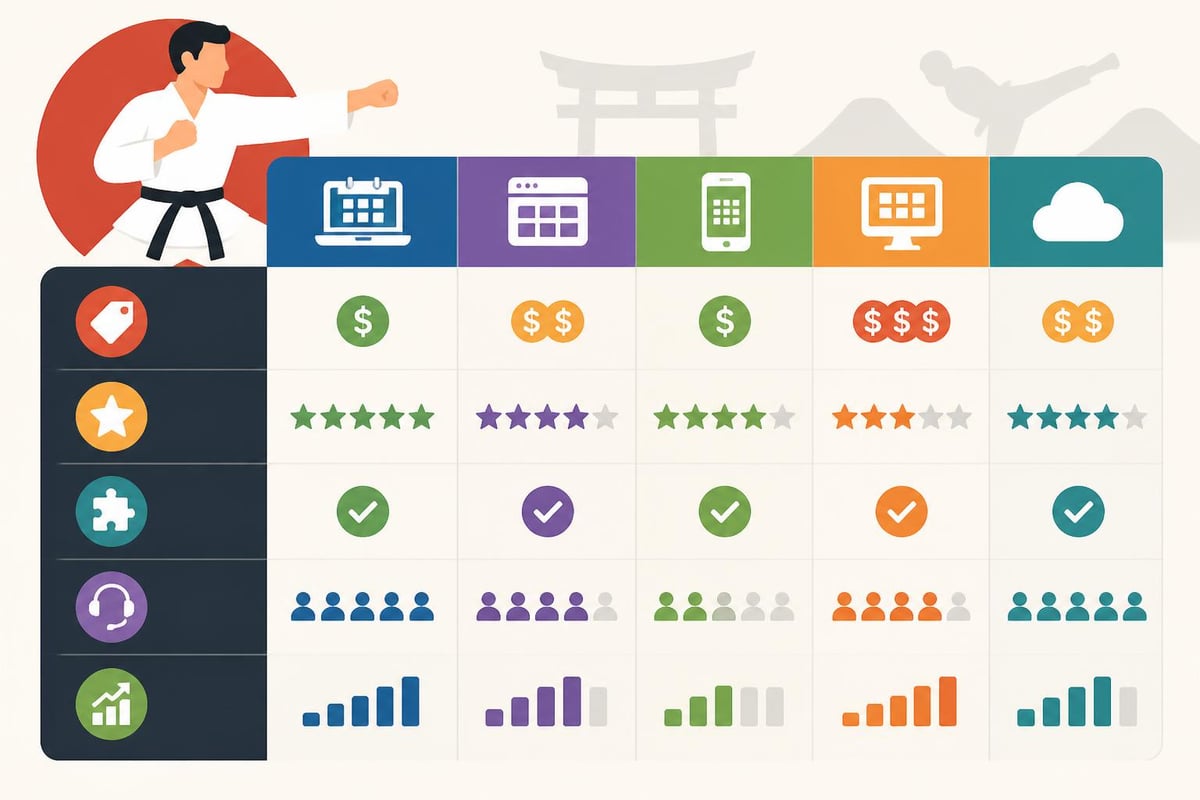
Critical features in class scheduling software include intuitive interfaces, robust reporting capabilities, and integration flexibility. When choosing the best class scheduling software, consider auto-assign functionalities that reduce administrative burden.
Change Management and Staff Training
Technology adoption succeeds or fails based on user acceptance. Even the most sophisticated class scheduling software delivers little value if instructors and staff resist using it properly.
Investing time in comprehensive training ensures smooth transitions. Staff members need to understand not just how to operate the software, but why the new system benefits them personally through reduced administrative work and fewer scheduling conflicts.
Data Migration and System Transition
Moving from legacy scheduling systems requires careful planning. Historical class data, student enrollment records, and instructor assignments must transfer accurately to maintain operational continuity.
Parallel running periods, where both old and new systems operate simultaneously for a defined transition period, reduce risk. This approach allows staff to verify data accuracy before fully retiring legacy systems.
Scalability and Multi-Location Management
Growing martial arts organizations face increasingly complex scheduling challenges. Class scheduling software must accommodate expansion without requiring complete system replacements.
Centralized Scheduling Across Locations
Multi-location academies benefit from centralized scheduling platforms that provide system-wide visibility while maintaining location-specific autonomy. Headquarters can monitor overall utilization and performance while individual locations manage their daily operations.
This structure supports traveling instructors who teach at multiple locations throughout the week. The system tracks instructor schedules across all sites, preventing double bookings and optimizing travel efficiency.
Franchise and License Management
Organizations operating franchise or licensing models require additional scheduling considerations. Maintaining brand consistency in program offerings while allowing franchisee flexibility demands sophisticated permission and customization settings.
Quality class scheduling software provides template schedules that franchisees can customize within defined parameters. This balance ensures brand standards while respecting local market conditions and operator preferences.
Security, Privacy, and Compliance Considerations
Class scheduling software manages sensitive information about students, including personal contact details, payment information, and attendance records. Robust security measures protect this data from unauthorized access or breaches.
Data Protection Standards
Reputable platforms implement encryption for data transmission and storage, regular security audits, and compliance with relevant data protection regulations. Academy owners should verify these safeguards before committing to any scheduling solution.
Access controls ensure staff members see only information relevant to their roles. Instructors might view class rosters and attendance records without accessing billing information, while front desk staff handle enrollment without viewing private notes about student progress.
Backup and Disaster Recovery
Reliable class scheduling software includes automated backup systems that preserve scheduling data against hardware failures, software bugs, or cyber incidents. Understanding backup frequency, retention periods, and recovery procedures provides peace of mind.
Cloud-based solutions typically offer superior disaster recovery compared to locally hosted systems, as data replicates across multiple geographic locations automatically. This redundancy ensures schedule continuity even during local outages or emergencies.
Mobile Technology and On-the-Go Management
Academy owners and instructors rarely spend entire days behind desks. Mobile-optimized class scheduling software enables schedule management from anywhere, whether at home, traveling between locations, or on the training mat.
Instructor Mobile Applications
Dedicated instructor apps provide quick access to class rosters, attendance marking, and schedule viewing. Instructors can review who's enrolled in their next class, mark attendance during sessions, and communicate with students directly through integrated messaging.
This mobile functionality eliminates paper attendance sheets and manual data entry, reducing administrative burden while improving data accuracy. Changes made on mobile devices sync instantly across all platforms, ensuring everyone works from current information.
Student Engagement Through Mobile Platforms
Students increasingly prefer managing their commitments through mobile devices. Class scheduling software with robust mobile experiences makes booking classes as simple as ordering food delivery or scheduling ride shares.
Push notification capabilities keep students informed about schedule changes, upcoming classes, and available spots in waitlisted sessions. This proactive communication reduces no-shows and maintains strong engagement between training sessions.
Implementing effective class scheduling software transforms martial arts academy operations from chaotic manual coordination to streamlined automated processes. The right platform reduces administrative overhead, maximizes resource utilization, and enhances student experience through convenient self-service capabilities. MatSync provides martial arts academies with comprehensive scheduling integrated seamlessly with attendance tracking, billing automation, and progress monitoring, creating a unified platform that handles every operational aspect while you focus on teaching exceptional martial arts instruction.