Timetable Plan: A Complete Guide for Martial Arts Schools
Master your timetable plan with proven strategies for martial arts academies. Learn how to schedule classes, balance instructors, and optimize student attendance.
- By
- RankPill
- Published
- June 24, 2026
- Reading time
- 11 min read

Running a successful martial arts academy requires more than exceptional teaching skills and passionate instructors. The foundation of a well-organized dojo lies in creating an effective timetable plan that balances student needs, instructor availability, facility constraints, and revenue optimization. Whether you manage a Brazilian Jiu-Jitsu school, a karate academy, or a multi-discipline martial arts center, your scheduling strategy directly impacts student retention, instructor satisfaction, and overall business performance. A thoughtfully designed timetable plan serves as the operational backbone that keeps classes running smoothly while maximizing attendance and engagement.
Understanding the Core Components of a Timetable Plan
Creating a comprehensive timetable plan starts with understanding the fundamental elements that shape your academy's schedule. These components work together to form a cohesive system that serves both your business objectives and student requirements.
Student Demographics and Skill Levels
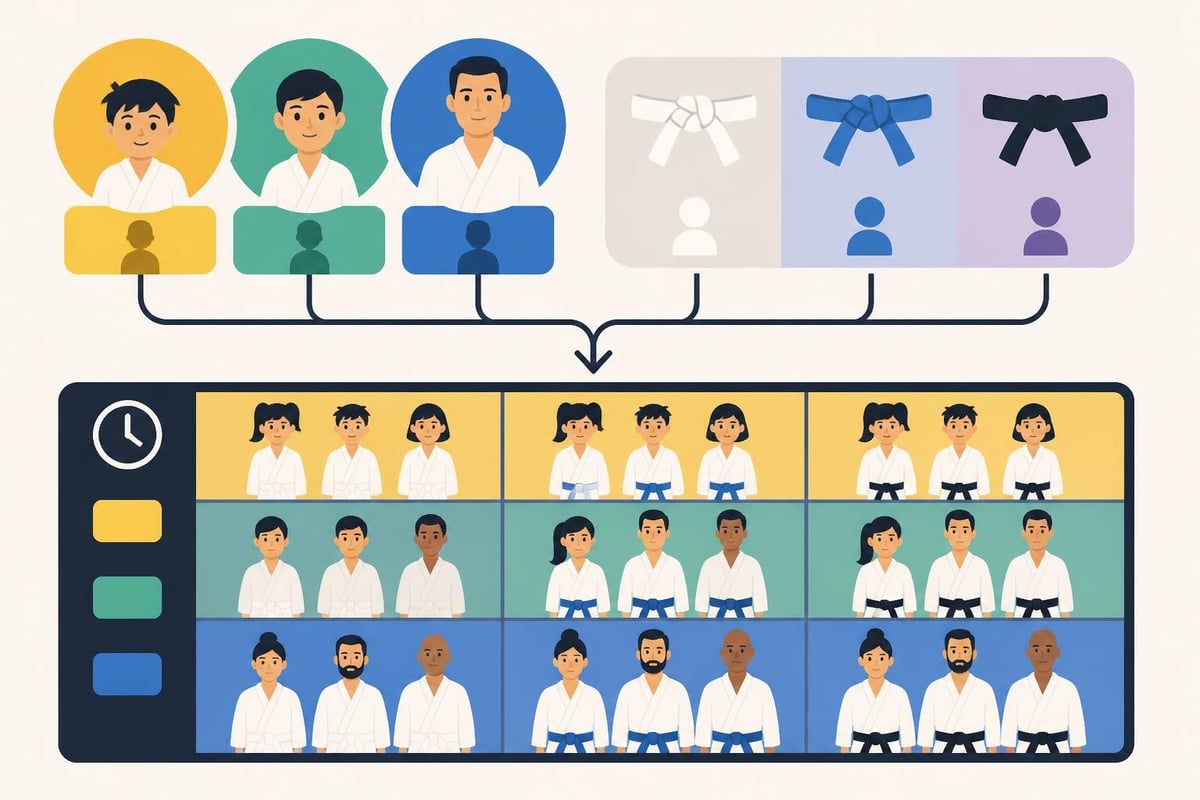
The first consideration in any timetable plan involves analyzing your student population. Martial arts academies typically serve diverse age groups, from young children to adults, each requiring different class durations and time slots.
Key demographic factors include:
- Age ranges (Little Dragons, kids, teens, adults)
- Skill levels (beginner, intermediate, advanced, competition team)
- Schedule preferences (morning, afternoon, evening, weekend)
- Attendance patterns and frequency goals
Understanding these variables helps you position classes when students are most likely to attend. For instance, children's classes typically perform better immediately after school hours, while adult sessions thrive in early morning or evening slots. Tracking student data provides valuable insights into attendance patterns that inform scheduling decisions.
Instructor Availability and Specialization
Your timetable plan must account for instructor schedules, teaching strengths, and workload distribution. The most effective schedules prevent instructor burnout while leveraging each teacher's expertise appropriately.
| Scheduling Factor | Consideration | Impact on Timetable |
|---|---|---|
| Teaching hours per week | Maximum sustainable load | Prevents instructor fatigue |
| Specialized skills | Competition coaching, kids programs | Matches expertise to class type |
| Availability windows | Part-time vs. full-time instructors | Determines possible time slots |
| Preparation time | Between consecutive classes | Ensures quality instruction |
According to research on key principles for effective timetabling, balancing instructor workload prevents fatigue and maintains teaching quality. This principle applies equally to martial arts academies where physical demonstration and personal attention form essential teaching components.
Designing Your Martial Arts Timetable Plan
Once you understand the foundational components, the next step involves structuring your timetable plan to optimize student experience and business performance. This process requires strategic thinking about class placement, duration, and frequency.
Class Duration and Frequency Standards
Different martial arts disciplines and skill levels require varied class lengths. Your timetable plan should reflect these needs while maintaining consistency that students can rely upon.
Recommended class durations by category:
- Little Dragons (ages 4-6): 30-40 minutes
- Kids classes (ages 7-12): 45-60 minutes
- Teen programs: 60 minutes
- Adult classes: 60-90 minutes
- Competition team training: 90-120 minutes
- Private lessons: 30-60 minutes
Frequency matters as much as duration. Most martial arts students benefit from training 2-3 times weekly, so your timetable plan should offer multiple opportunities at different times. For disciplines like Brazilian Jiu-Jitsu or MMA, where skill development requires consistent repetition, providing options throughout the week increases student success rates.
Peak Time Management and Class Variety
Every martial arts academy experiences peak attendance periods, typically weekday evenings between 5:00 PM and 8:00 PM. Your timetable plan must maximize facility utilization during these windows while maintaining educational quality.
Consider implementing a rotation system where different skill levels occupy your mat space at strategic intervals. This approach prevents overcrowding while offering students convenient scheduling options. The formula for effective timetabling emphasizes managing these constraints through careful planning and resource allocation.

Advanced Scheduling Strategies for Martial Arts Academies
Beyond basic time slot allocation, sophisticated timetable plans incorporate strategic elements that enhance both student progression and revenue generation. These advanced techniques separate thriving academies from those that struggle with retention and growth.
Progressive Skill Pathways
Your timetable plan should create clear pathways that guide students through their martial arts journey. This means scheduling classes that naturally flow from one level to the next, encouraging consistent attendance and advancement.
Pathway structure elements:
- Beginner fundamentals classes offered multiple times weekly
- Intermediate sessions building on foundational skills
- Advanced technical classes for experienced practitioners
- Open mat or sparring sessions for skill application
- Specialized workshops and seminars scheduled monthly
This progressive structure appears in successful karate and judo programs where belt advancement requires mastering specific techniques at each level. Your timetable plan makes these pathways visible and accessible.
Multi-Discipline Integration
Academies offering multiple martial arts styles face unique timetable plan challenges. The schedule must prevent overlap while creating complementary training opportunities that encourage cross-training.
| Discipline Combination | Scheduling Strategy | Student Benefit |
|---|---|---|
| Boxing + Muay Thai | Alternate days or time slots | Complementary striking skills |
| BJJ + Judo | Back-to-back or same-day options | Enhanced grappling repertoire |
| Karate + Kickboxing | Evening rotation schedule | Traditional and modern striking |
| MMA + Component arts | MMA as anchor, components fill schedule | Complete fighting system |
For instance, offering boxing at 6:00 PM followed by kickboxing at 7:30 PM allows students to participate in both while giving the facility maximum efficiency. This strategic scheduling increases monthly revenue per student.
Optimizing Your Timetable Plan for Maximum Attendance
Even the most thoughtfully designed timetable plan fails if students don't attend classes regularly. Optimization involves analyzing attendance data, gathering feedback, and making strategic adjustments that improve participation rates.
Data-Driven Schedule Adjustments
Modern martial arts management requires tracking which classes perform well and which struggle with attendance. This information guides refinements to your timetable plan throughout the year.
Metrics to monitor regularly:
- Class attendance percentages by time slot
- Student retention rates correlated with schedule preferences
- Instructor performance across different class times
- Facility utilization during peak and off-peak hours
- Revenue generation per class session
- Waitlist frequency indicating demand exceeding capacity
Implementing a robust system for monitoring these metrics ensures your timetable plan evolves with student needs. The research on creating effective timetables emphasizes this continuous improvement approach.
Seasonal and Event-Based Scheduling
Your timetable plan shouldn't remain static throughout the year. Seasonal variations, school calendars, and special events require schedule flexibility that maintains student engagement.
During summer months, adding morning classes captures students with altered schedules. Holiday periods might warrant modified timetables that reduce class frequency while maintaining touchpoints with your community. Competition preparation requires additional training sessions integrated into your existing framework without overwhelming students or instructors.

Technology Integration in Modern Timetable Planning
Contemporary martial arts academies benefit from digital tools that streamline timetable plan creation, communication, and modification. Technology eliminates manual scheduling errors while providing students with real-time access to class information.
Automated Scheduling Systems
Manual timetable planning becomes increasingly complex as your academy grows. Automated systems handle instructor rotations, facility conflicts, and capacity management while flagging potential issues before they impact operations.
These platforms integrate with attendance tracking, ensuring your timetable plan reflects actual participation patterns. When a Muay Thai class consistently reaches capacity, the system alerts you to consider adding another session. Conversely, underperforming time slots become visible, allowing strategic adjustments.
Student Access and Communication
The best timetable plan fails if students can't easily access schedule information. Digital platforms provide mobile-friendly calendars, automatic reminders, and instant updates when changes occur.
Essential communication features:
- Real-time schedule access via mobile apps
- Automated class reminders sent before sessions
- Instant notifications for schedule changes or cancellations
- Waitlist management for popular classes
- Integration with billing systems for class credits
This technological approach mirrors principles found in effective academic timetabling, where accessible scheduling information improves participation and satisfaction.
Common Timetable Plan Mistakes to Avoid
Even experienced martial arts academy owners occasionally create scheduling problems that reduce attendance and revenue. Recognizing these common errors helps you build a more effective timetable plan from the start.
Overcrowding Peak Times
The temptation to schedule everything during popular evening hours creates overcrowded classes that diminish student experience. Your timetable plan should distribute offerings across available time slots while respecting demand patterns.
Consider implementing capacity limits that maintain instructor-to-student ratios conducive to quality instruction. When classes consistently fill, adding parallel sessions with different instructors serves more students without compromising educational value.
Neglecting Instructor Recovery
Back-to-back classes without breaks exhausts instructors and reduces teaching quality. Your timetable plan must include adequate preparation and recovery time between sessions.
| Class Combination | Minimum Break Time | Rationale |
|---|---|---|
| Same skill level, different students | 10-15 minutes | Instructor reset and prep |
| Different skill levels | 15-30 minutes | Content preparation required |
| High-intensity classes | 30-45 minutes | Physical recovery needed |
| Adult to kids classes | 20-30 minutes | Mental shift and energy adjustment |
This consideration appears in educational research on timetable design, emphasizing sustainable workload distribution.
Revenue Optimization Through Strategic Scheduling
Your timetable plan directly impacts academy revenue through class utilization, student retention, and upsell opportunities. Strategic scheduling transforms your calendar into a profit-generating asset.
Premium Class Positioning
Certain class types justify premium pricing, and your timetable plan should position these offerings strategically. Competition team training, advanced seminars, and specialized workshops command higher fees when scheduled thoughtfully.
Place premium classes at times when your target demographic is available and willing to pay for exclusive instruction. Early Saturday morning advanced sessions or weeknight competition prep creates perceived value while generating incremental revenue.
Maximizing Student Monthly Value
Students who attend more frequently remain longer and spend more on your programs. Your timetable plan should encourage increased participation through strategic class variety and convenient scheduling.
Strategies to increase monthly attendance:
- Offer unlimited membership tiers with diverse class options
- Schedule complementary classes on the same day
- Create "challenges" requiring specific class combinations
- Position beginner through advanced options throughout the week
- Add specialty classes that appeal to existing students
This approach works across disciplines, whether you're managing a single-focus judo academy or a multi-discipline facility.
Implementing and Refining Your Timetable Plan
Creating the perfect timetable plan involves iterative refinement based on feedback and performance data. Implementation should follow a structured process that minimizes disruption while gathering valuable insights.
Pilot Testing Schedule Changes
Before committing to major timetable plan revisions, test changes with a subset of classes or time periods. This controlled approach reveals potential issues without risking academy-wide disruption.
Announce pilot programs clearly, explaining the testing period and requesting student feedback. This transparency builds trust while collecting data that informs final decisions. Monitor attendance, gather instructor input, and survey affected students to assess whether changes achieve intended goals.
Gathering Stakeholder Feedback
Your timetable plan affects students, instructors, and staff differently. Comprehensive feedback from all stakeholders ensures schedule changes serve everyone's needs appropriately.
Feedback collection methods:
- Digital surveys sent to active students
- Instructor focus groups discussing workload and preferences
- Parent input for children's programs
- Front desk staff observations about common scheduling questions
- Analysis of customer service inquiries related to schedule access
Integrating this feedback creates a timetable plan that reflects real-world needs rather than theoretical ideals. The principles of designing effective timetables for primary schools emphasize this user-centered approach, which applies equally to martial arts education.
Maintaining Schedule Flexibility and Adaptation
The most effective timetable plan balances consistency with flexibility, allowing for adjustments without constant upheaval. This equilibrium keeps students confident in their routine while accommodating necessary changes.
Regular quarterly reviews ensure your schedule evolves with student needs, market demands, and business objectives. These scheduled evaluation periods provide natural opportunities for refinement without appearing reactive or disorganized.
Document the reasoning behind timetable plan decisions, creating institutional knowledge that guides future adjustments. When you understand why certain classes occupy specific time slots, modifications become strategic rather than arbitrary.
A well-crafted timetable plan forms the operational foundation that allows martial arts academies to deliver consistent, high-quality instruction while maximizing business performance. By balancing student demographics, instructor capabilities, facility constraints, and revenue objectives, academy owners create schedules that serve everyone's needs effectively. MatSync simplifies this complex process with automated scheduling tools, attendance tracking, and data analytics that transform your timetable plan from a static document into a dynamic growth engine. Start optimizing your martial arts academy's schedule today and experience how strategic timetable planning drives student satisfaction, instructor retention, and sustainable revenue growth.