Real Time Management for Martial Arts Academies
Discover how real time management transforms martial arts academies. Learn strategies for attendance tracking, billing automation, and student progress.
- By
- RankPill
- Published
- May 31, 2026
- Reading time
- 13 min read

Running a martial arts academy requires juggling dozens of simultaneous tasks, from tracking student attendance to processing payments and monitoring skill progression. The traditional approach of handling these responsibilities separately creates delays, errors, and missed opportunities. Modern martial arts academies need real time management systems that process information instantly, enabling owners and instructors to make informed decisions while students are still on the mat.
Understanding Real Time Management in Martial Arts Academies
Real time management represents a fundamental shift from periodic updates to continuous data processing and immediate response capabilities. For martial arts schools, this means every student check-in, payment transaction, belt progression, and class booking updates your system instantaneously rather than waiting for end-of-day reconciliation.
The difference becomes particularly evident during peak hours when multiple classes run simultaneously. Without real time management, instructors cannot immediately see which students have active memberships, parents receive delayed notifications about missed payments, and scheduling conflicts only surface after commitments are made.

The Core Components of Real Time Systems
Implementing effective real time management requires several integrated components working in harmony. Each element must process and share information without delay to maintain system-wide accuracy.
Essential Real Time Management Elements:
- Instant data synchronization across all devices and user interfaces
- Automated trigger responses that execute actions based on specific events
- Live dashboard updates reflecting current academy status
- Immediate notification systems for staff, students, and parents
- Real time validation of memberships, schedules, and payment status
These components work together to create what experts identify as best practices for managing real-time data integration, ensuring information flows seamlessly throughout your organization. When a Brazilian Jiu-Jitsu student checks in for class, the system immediately verifies their membership status, logs their attendance, updates their training frequency metrics, and notifies parents if they're under 18.
Attendance Tracking Through Real Time Management
Traditional attendance tracking relies on sign-in sheets, manual entry, or batch processing that updates records hours after class ends. Real time management transforms this process into an instantaneous system that captures and processes attendance data the moment students arrive.
Modern check-in systems use mobile apps, QR codes, or biometric scanners to record attendance. The information immediately flows into your central database, updating student profiles, class rosters, and attendance analytics without human intervention.
| Traditional Method | Real Time Management | Impact |
|---|---|---|
| Paper sign-in sheets | Digital check-in with instant logging | Eliminates data entry errors |
| End-of-day manual entry | Automatic database updates | Saves 2-3 hours daily |
| Weekly attendance reports | Live attendance dashboards | Enables immediate intervention |
| Delayed parent notifications | Instant alerts for absences | Improves communication |
This immediate processing allows instructors to identify attendance patterns as they develop rather than discovering problems weeks later. If a dedicated Judo student misses three consecutive classes, real time management systems can automatically trigger outreach before the student becomes disengaged.
Leveraging Attendance Data for Student Retention
Real time management doesn't just record who attended; it analyzes patterns and triggers appropriate responses. When attendance frequency drops below established thresholds, the system can automatically schedule check-in calls, offer additional training resources, or flag accounts for instructor attention.
The immediate visibility into attendance trends enables proactive retention strategies. Academy owners can monitor class popularity in real time, identifying which instructors, time slots, or class formats generate the highest engagement. This information guides scheduling decisions and resource allocation while opportunities still exist to make adjustments.
Automated Billing and Payment Processing
Payment processing represents one of the most critical applications of real time management in martial arts academies. Delayed payment information creates cash flow uncertainty, collection challenges, and administrative burden that diverts attention from instruction and student development.
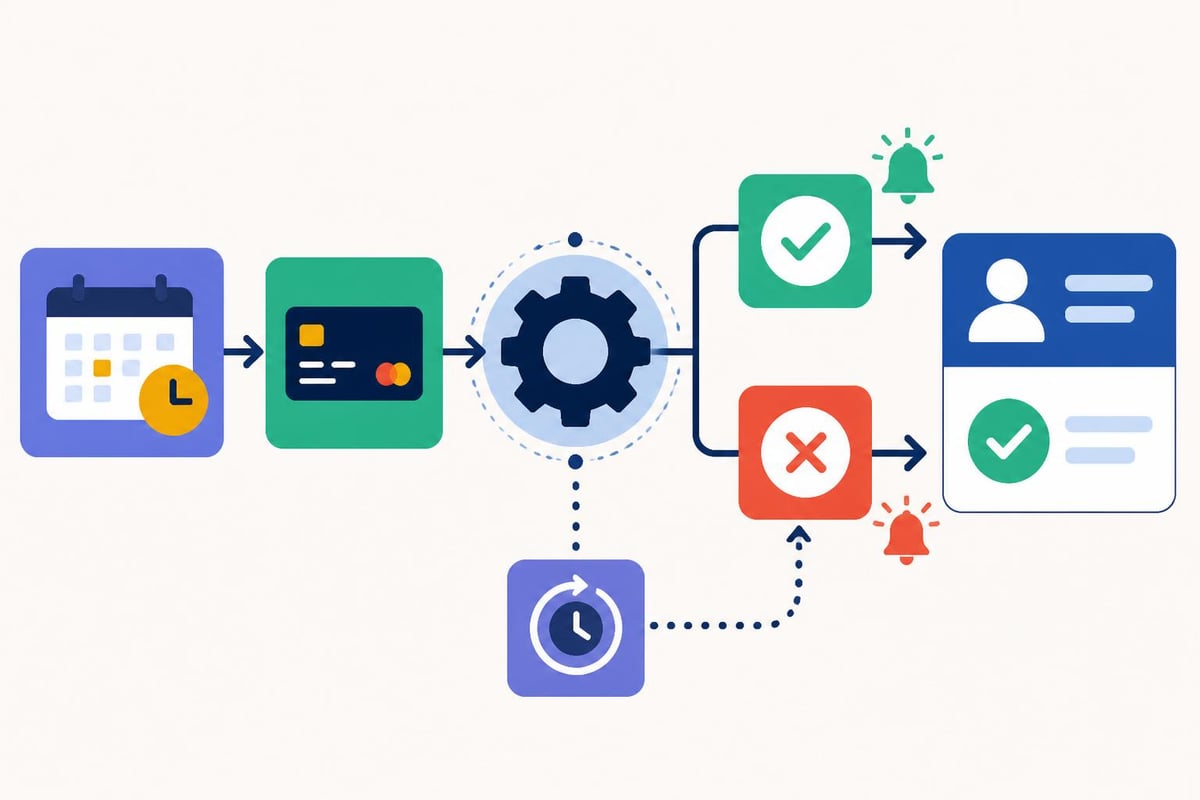
Real time management systems process payments instantly, update account balances immediately, and trigger appropriate responses based on payment status. When a monthly membership payment processes successfully, the system immediately extends access privileges, sends confirmation notifications, and updates financial dashboards.
Real Time Payment Management Benefits:
- Immediate failed payment detection enabling same-day resolution attempts
- Instant membership status updates preventing awkward access denial situations
- Automated dunning sequences that begin immediately after payment failures
- Real time revenue dashboards showing current financial position
- Immediate reconciliation between expected and received payments
The real-time performance management approach to billing creates transparency that benefits both academy owners and students. Parents know immediately when payments process, when cards decline, or when outstanding balances require attention. This eliminates surprise access restrictions and improves the overall customer experience.
Reducing Revenue Leakage Through Real Time Systems
Revenue leakage occurs when billing delays allow students to train without current payments, when system lags prevent timely collection attempts, or when manual processes miss billing cycles entirely. Real time management eliminates these gaps by ensuring every transaction processes immediately and every exception triggers immediate response.
For Karate academies managing hundreds of students across multiple membership tiers, the difference between delayed and immediate billing information can represent thousands of dollars monthly. Real time systems identify payment failures within minutes rather than days, increasing successful retry rates and reducing involuntary churn.
Progress Tracking and Student Development
Student progression represents the core value proposition of martial arts training, yet many academies track advancement through periodic assessments rather than continuous monitoring. Real time management enables instructors to log skill achievements, technique mastery, and behavioral observations immediately, creating comprehensive development profiles that guide personalized instruction.
When instructors record progress notes during or immediately after class, the information becomes part of the student's permanent record instantly. Parents can view updated progress reports in real time, belt readiness assessments reflect current capabilities rather than outdated evaluations, and academy owners can identify students requiring additional support before they become frustrated.
Implementing Continuous Progress Monitoring
The shift from periodic to continuous progress tracking requires cultural and technological changes. Instructors need mobile-friendly interfaces that make recording observations effortless rather than burdensome. The system must categorize progress across multiple dimensions, from technical skills to discipline and attendance consistency.
| Progress Dimension | Traditional Tracking | Real Time Management |
|---|---|---|
| Technique mastery | Quarterly belt tests | Ongoing skill verification |
| Class participation | Instructor memory | Logged engagement metrics |
| Behavioral development | Annual reviews | Continuous observation notes |
| Readiness for advancement | Subjective assessment | Data-driven recommendations |
Real time management systems can aggregate progress data across all dimensions, providing holistic student development profiles that inform promotion decisions. A Boxing student might demonstrate technical proficiency but lack the attendance consistency or sparring confidence required for advancement. The system surfaces these gaps immediately rather than during high-pressure testing situations.
Operational Efficiency Through Real Time Visibility
Beyond specific functions like billing or attendance, real time management transforms overall operational efficiency by providing continuous visibility into academy performance. Owners can monitor key metrics, identify emerging issues, and capitalize on opportunities without waiting for periodic reports.
This operational awareness extends across all academy functions. Class capacity tracking prevents overbooking while maximizing attendance. Inventory systems trigger reorder notifications when equipment reaches minimum levels. Staff scheduling tools identify coverage gaps as they develop rather than after schedules publish.
The principles outlined in resources about real-time collaboration apply equally to martial arts academies. When everyone operates from the same current information, coordination improves, conflicts decrease, and the entire organization responds more effectively to changing conditions.
Dashboard Design for Actionable Insights
Effective real time management requires thoughtful dashboard design that presents critical information clearly without overwhelming users. Academy owners need different views than front desk staff, while instructors require access to student-specific data rather than business-wide metrics.
Essential Dashboard Elements:
- Current class attendance vs. capacity across all active sessions
- Today's revenue vs. target with month-to-date comparison
- Outstanding payment issues requiring immediate attention
- Student milestones achieved today (belt progressions, attendance records)
- Upcoming schedule conflicts or resource constraints
These dashboards should update continuously without manual refresh, ensuring decision-makers always see current conditions. For MMA academies managing complex schedules across striking, grappling, and conditioning classes, real time visibility prevents double-booking instructors or exceeding safe student-to-teacher ratios.

Integrating Real Time Management Across Systems
The full power of real time management emerges when all academy systems integrate seamlessly, sharing information instantly without manual intervention. A comprehensive management profile connects billing, attendance, communication, scheduling, and progress tracking into a unified platform.
This integration eliminates data silos where critical information remains trapped in isolated systems. When attendance connects to billing, the system can automatically adjust charges for students on punch card plans. When progress tracking connects to scheduling, students become eligible for advanced classes automatically upon achieving prerequisite skills.
Building a Connected Academy Ecosystem
Creating this connected ecosystem requires selecting platforms designed for integration rather than attempting to force disconnected tools to communicate. The technical approaches discussed in resources about best practices for real-time data management emphasize choosing systems with robust APIs and native integration capabilities.
For martial arts academies, this might mean ensuring your management platform connects with:
- Payment processors for instant transaction updates
- Communication tools for automated notifications
- Marketing systems for engagement tracking
- Accounting software for financial reconciliation
- Equipment vendors for inventory management
When these systems share data in real time, administrative workload decreases dramatically while operational visibility improves. A Muay Thai academy can track glove inventory, correlate usage with attendance patterns, and automatically reorder equipment before shortages impact training quality.
Managing Multiple Locations with Real Time Systems
Academies operating multiple locations face exponentially greater coordination challenges. Real time management becomes essential for maintaining consistent operations, sharing resources efficiently, and providing owners with comprehensive visibility across all facilities.
Centralized real time dashboards aggregate data from all locations, enabling comparison of performance metrics, identification of best practices, and rapid response to location-specific issues. When one facility experiences equipment failures or instructor absences, the system immediately surfaces the problem and facilitates resource sharing with nearby locations.
Multi-Location Real Time Management Applications:
- Cross-location membership access and billing reconciliation
- Instructor scheduling across facilities based on real time demand
- Equipment sharing and transfer tracking between locations
- Unified student progression standards with location-specific customization
- Consolidated financial reporting with location-level detail
The implementation considerations outlined in guides about real-time monitoring across hybrid IT apply to multi-location martial arts operations. Each facility requires local processing capability while maintaining continuous synchronization with central systems.
Student and Parent Communication in Real Time
Modern martial arts students and parents expect immediate communication about schedule changes, payment issues, or student achievements. Real time management enables automated, personalized notifications that keep families informed without creating additional work for staff.
These systems trigger messages based on specific events rather than manual staff effort. When a Kickboxing class gets canceled due to instructor illness, enrolled students receive immediate notifications with alternative class options. When students achieve belt promotions or attendance milestones, parents receive congratulatory messages instantly.
Balancing Automation with Personal Touch
While real time management automates routine communications, successful implementation preserves opportunities for personal interaction where it matters most. Automated systems handle transactional messages about payments, schedules, and routine updates, freeing staff to focus on relationship-building conversations about student development and academy community.
The key involves configuring systems to escalate appropriate situations to human attention. Payment failures might trigger three automated retry attempts before flagging accounts for personal outreach. Attendance declines generate automated check-in messages initially, but persistent patterns alert instructors to make personal contact.
Security and Privacy in Real Time Systems
Managing student information, payment data, and family contacts in real time requires robust security measures that protect sensitive data without compromising system responsiveness. Real time management platforms must encrypt data in transit and at rest, implement role-based access controls, and maintain comprehensive audit logs.
For martial arts academies, this means ensuring:
- Payment information never stores in accessible formats
- Staff members access only information relevant to their roles
- Parent portals show only their own family's data
- System access requires strong authentication
- Activity logs track all data access and modifications
These security measures become even more critical when managing real time systems because immediate data processing increases exposure to potential breaches. Following established protocols ensures protection while maintaining the speed that makes real time management valuable.
Measuring Real Time Management Success
Implementing real time management represents significant investment in technology, training, and process redesign. Measuring return on investment requires tracking specific metrics that demonstrate operational improvements and financial benefits.
| Metric Category | Key Performance Indicators | Measurement Frequency |
|---|---|---|
| Operational Efficiency | Staff hours on administrative tasks | Weekly |
| Financial Performance | Payment collection rates, revenue per student | Daily |
| Student Retention | Attendance consistency, membership renewals | Monthly |
| Communication Effectiveness | Notification open rates, response times | Weekly |
| System Adoption | Feature utilization, mobile app engagement | Monthly |
These metrics should appear on real time dashboards themselves, creating continuous feedback about system performance. When collection rates improve following real time payment processing implementation, the data validates the investment. When staff hours decrease as automation handles routine tasks, the efficiency gains become measurable.
The analytical approaches described in resources about real-time analytics best practices help academies extract actionable insights from the vast data streams real time management generates. The goal extends beyond collecting information to using it for continuous improvement.
Training Staff for Real Time Management Success
Technology alone cannot deliver real time management benefits without staff who understand how to leverage new capabilities effectively. Comprehensive training ensures instructors, administrators, and front desk personnel can operate systems confidently while maintaining focus on student service.
Training should cover both technical operation and conceptual understanding of why real time management matters. Staff need to know how to record attendance, process payments, and update student records. They also need to understand how their actions impact downstream processes and why immediate data entry matters for system-wide accuracy.
Ongoing education proves equally important as initial training. As systems evolve and new features launch, staff require updated training to utilize enhancements effectively. Regular refresher sessions reinforce best practices and address common errors that compromise data quality.
Real time management transforms martial arts academy operations from reactive task management to proactive strategic leadership. By processing information instantly, automating routine functions, and providing continuous visibility into performance, these systems free owners and instructors to focus on what matters most: delivering exceptional martial arts instruction and building thriving academy communities. MatSync provides martial arts academies with comprehensive real time management capabilities, from automated billing and attendance tracking to class scheduling and student progress monitoring. Explore how MatSync can streamline your academy operations and enhance your students' training experience.