GDPR Compliant Software for Martial Arts Schools
Discover how GDPR compliant software protects student data in martial arts academies. Learn essential features, implementation strategies, and best practices.
- By
- RankPill
- Published
- May 10, 2026
- Reading time
- 15 min read
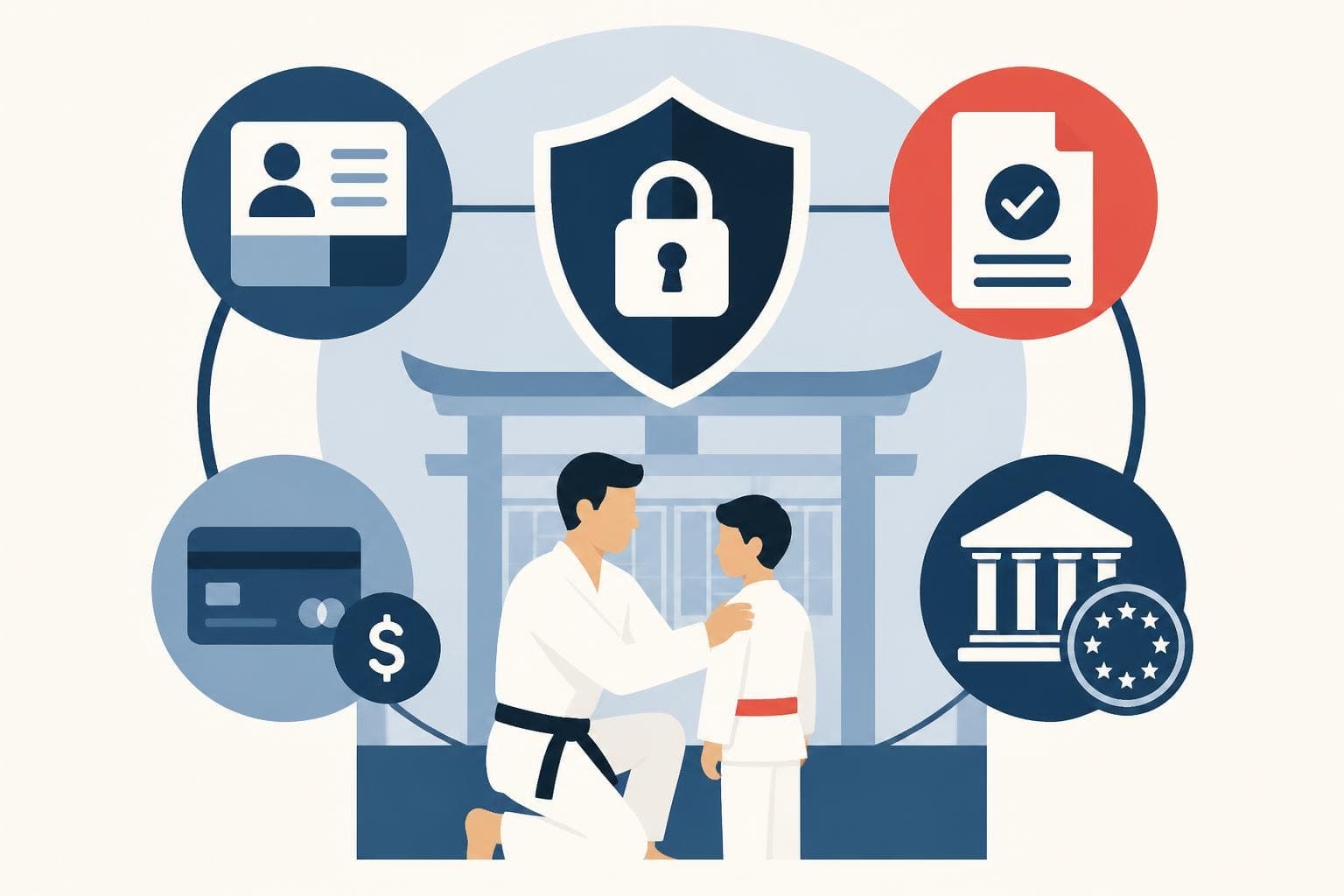
Martial arts academies handle sensitive student information daily, from payment details to personal health data and attendance records. With the General Data Protection Regulation (GDPR) imposing strict requirements on how organizations collect, store, and process personal data, choosing the right gdpr compliant software has become essential for academy owners. This is particularly critical for schools serving European students or operating in EU territories, where non-compliance can result in substantial fines reaching up to 4% of annual revenue or €20 million, whichever is higher. Understanding how to select and implement compliant systems protects both your students and your business.
Understanding GDPR Requirements for Martial Arts Academies
GDPR compliance extends far beyond simple data storage. The regulation establishes comprehensive requirements for how businesses handle personal information throughout its entire lifecycle.
Core Principles That Apply to Academy Management
Lawfulness, fairness, and transparency form the foundation of GDPR. Your academy must have legitimate reasons for collecting student data, typically based on contractual necessity for membership services. Students and parents need clear information about what data you collect and why.
Purpose limitation means collecting data only for specified, legitimate purposes. When you gather information during enrollment for Brazilian Jiu-Jitsu classes, you cannot later use that same data for unrelated marketing campaigns without new consent.
Data minimization requires collecting only what's necessary. If you're tracking attendance, you need student names and class times, but you don't need their entire medical history unless they've disclosed conditions relevant to training safety.
| GDPR Principle | Academy Application | Software Requirement |
|---|---|---|
| Lawfulness | Valid membership contract | Consent tracking features |
| Purpose Limitation | Specific use cases documented | Role-based access controls |
| Data Minimization | Only essential fields collected | Customizable data forms |
| Accuracy | Regular data updates | Student self-service portals |
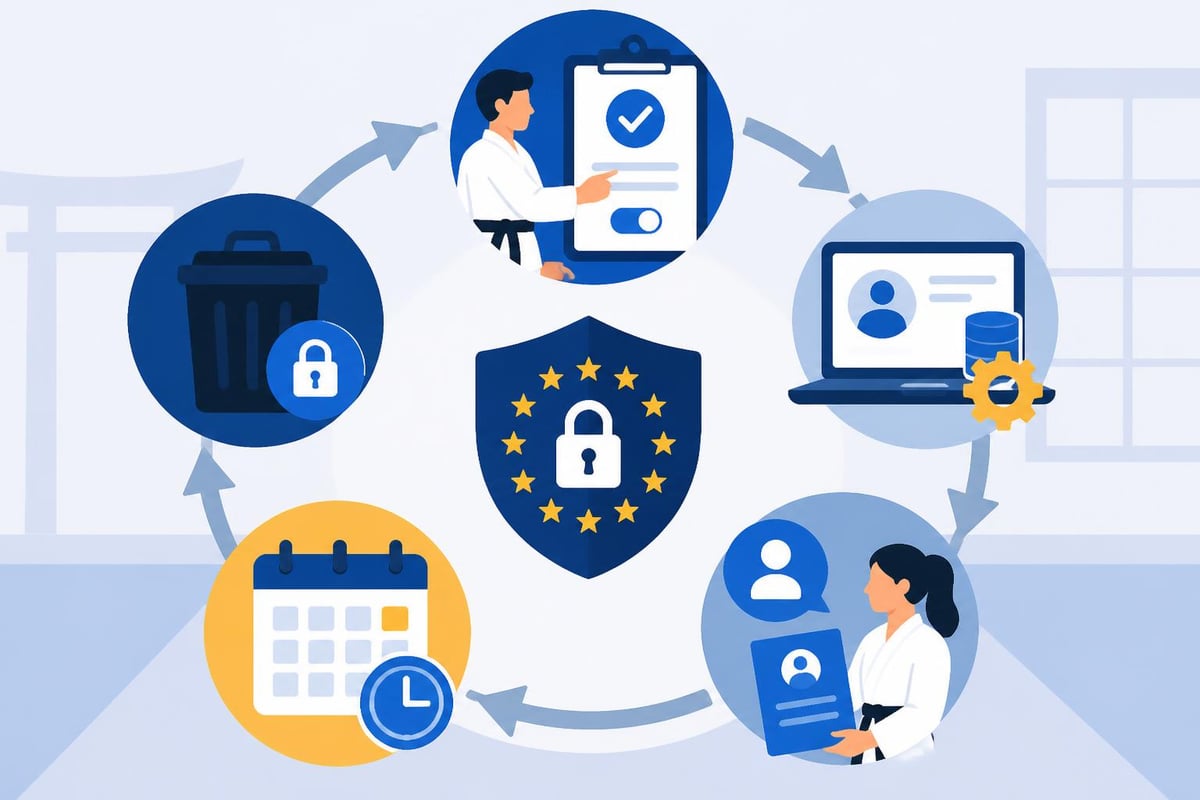
| Storage Limitation | Retention policies enforced | Automated deletion capabilities |
| Security | Protection against breaches | Encryption and audit logs |
Special Considerations for Minors' Data
Most martial arts academies serve significant numbers of minors, which introduces additional complexity. GDPR provides enhanced protections for children's data, requiring verifiable parental consent for students under 16 (though some EU member states set this threshold at 13).
Your gdpr compliant software must facilitate proper consent management. This includes storing proof of parental authorization, tracking which parent or guardian provided consent, and maintaining the ability to revoke that consent instantly.
Essential Features in GDPR Compliant Software
Selecting appropriate software requires understanding which technical capabilities support compliance obligations.
Data Subject Rights Management
GDPR grants individuals eight fundamental rights regarding their personal data. Your software must enable you to fulfill these rights efficiently:
- Right of access: Students can request copies of all data you hold about them
- Right to rectification: Ability to correct inaccurate information immediately
- Right to erasure: Complete data deletion upon valid request
- Right to data portability: Export data in machine-readable formats
- Right to restriction: Temporarily limit processing while disputes are resolved
Platforms like MatSync incorporate these capabilities directly into their management systems, allowing academy owners to respond to requests within the required 30-day timeframe without manual data extraction.
Encryption and Security Protocols
Implementing robust security measures represents both a legal requirement and practical necessity. GDPR mandates "appropriate technical and organizational measures" to protect personal data.
End-to-end encryption ensures data remains protected both in transit and at rest. When processing payments for karate memberships, encryption prevents unauthorized access to financial information.
Role-based access controls limit who can view specific data types. Your front desk staff might need access to contact information and class schedules, while only designated administrators should access payment details or sensitive notes about student accommodations.
Authentication protocols should include multi-factor authentication options, password complexity requirements, and automatic logout after periods of inactivity.
Audit Trails and Activity Logging
Comprehensive logging capabilities prove invaluable during compliance audits or security investigations. Your gdpr compliant software should automatically record:
- User login attempts and access patterns
- Data modifications with timestamps and user identifications
- Export activities and data transfers
- Consent updates and withdrawal requests
- Deletion operations and retention policy enforcement
These logs must be immutable and stored securely for the duration required by your data retention policies, typically ranging from one to seven years depending on the data type.
Choosing the Right Platform for Your Academy
The software selection process requires evaluating vendors against specific compliance criteria while considering operational needs.
Vendor Assessment Criteria
Data Processing Agreements (DPAs) establish the legal framework between your academy and software providers. Any vendor processing student data on your behalf qualifies as a "data processor" under GDPR, requiring a formal DPA that specifies responsibilities, security measures, and breach notification procedures.
Selecting appropriate GDPR compliance software involves verifying that vendors maintain their own compliance certifications and can demonstrate adherence to security standards like ISO 27001 or SOC 2.
Data residency determines where information physically resides. Some martial arts schools prefer vendors storing data exclusively within EU data centers to simplify compliance, while others accept international transfers if proper safeguards exist.
| Evaluation Factor | Questions to Ask | Why It Matters |
|---|---|---|
| Data Location | Where are servers physically located? | Impacts transfer mechanisms needed |
| Subprocessors | Who else accesses our data? | Each requires separate DPA |
| Certifications | What compliance standards are met? | Demonstrates security commitment |
| Breach Response | What's the notification timeline? | GDPR requires 72-hour reporting |
| Exit Strategy | How do we retrieve data if switching? | Ensures data portability rights |
Integration and Automation Capabilities
Manual compliance processes introduce human error and consume valuable time. Modern gdpr compliant software automates critical functions:
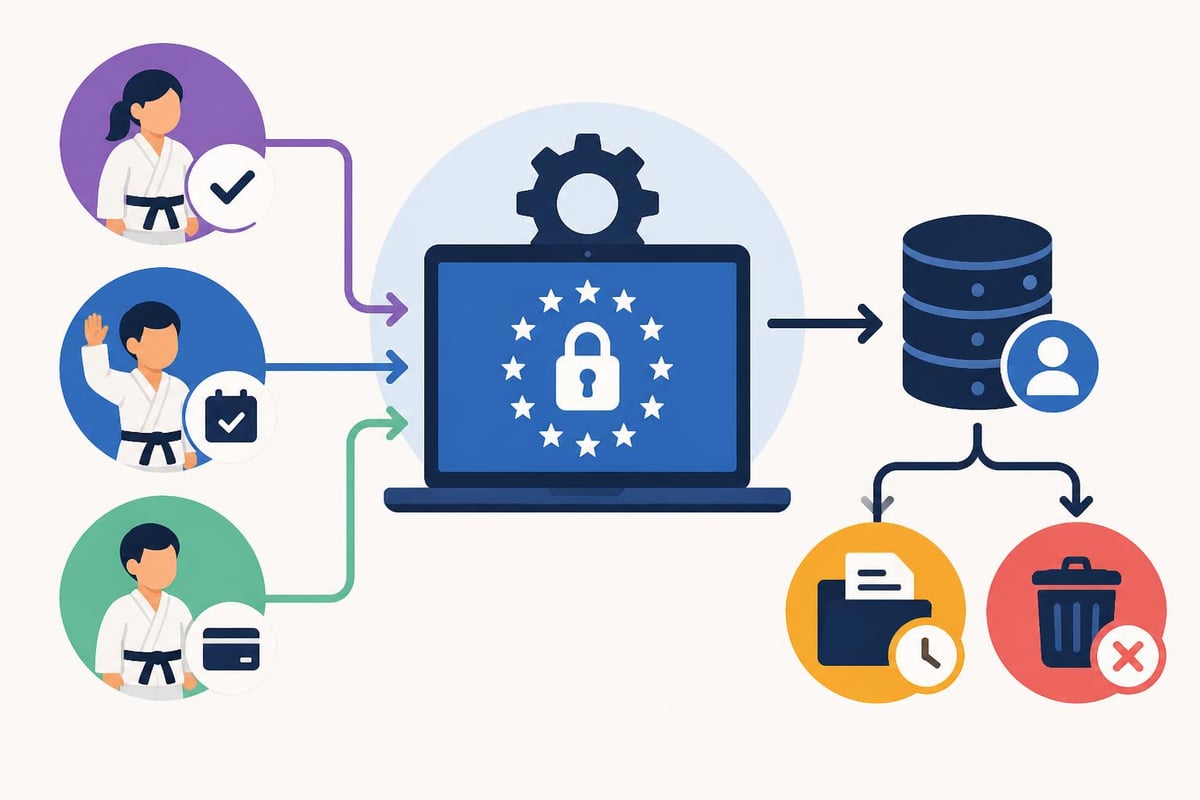
Consent management systems track permissions across multiple channels. When a parent enrolls their child in MMA classes, the system should record consent for class participation, emergency contact usage, photo permissions for social media, and marketing communications separately.
Automated retention policies apply predetermined rules without manual intervention. Student records might need retention for seven years for tax purposes, but marketing data could face deletion after two years of inactivity.
Privacy impact assessments become simpler when software includes data mapping features showing information flows throughout your operations.
Implementation Strategies for Martial Arts Schools
Deploying gdpr compliant software requires methodical planning and stakeholder engagement.
Data Mapping and Inventory
Before implementing new systems, document your current data landscape. Create a comprehensive inventory identifying:
- What personal data you collect during enrollment, billing, and operations
- Why you need each data element and its legal basis
- Where information is stored (software platforms, spreadsheets, paper records)
- Who has access to different data categories
- How long each data type must be retained
Many academy owners discover they've been collecting unnecessary information through legacy enrollment forms. A judo school might realize they're still asking for parents' work addresses despite never using that information.
Tools like The Analytics Doctor can help martial arts academies organize and analyze their existing data structures, ensuring clean migration to new gdpr compliant software while eliminating redundant information.
Staff Training and Policy Development
Technology alone cannot ensure compliance. Your team needs clear policies and proper training on GDPR principles.
Privacy policies should use plain language explaining data practices to students and parents. Avoid legal jargon in favor of clear descriptions: "We collect your email address to send class schedules and emergency closures" rather than "We process contact information for legitimate business interests."
Internal procedures guide staff through common scenarios:
- Responding to access requests within required timeframes
- Verifying identity before disclosing personal information
- Escalating potential data breaches to designated personnel
- Documenting consent during enrollment processes
- Handling data deletion requests appropriately
Maintaining ongoing GDPR compliance requires regular refresher training as regulations evolve and new staff join your academy.
Migration and Testing Procedures
Transitioning to new gdpr compliant software demands careful execution to prevent data loss or unauthorized exposure.
Pilot testing with a subset of student records identifies issues before full deployment. Select a representative sample including various membership types, payment arrangements, and family structures to stress-test the system.
Data cleansing removes outdated or unnecessary information before migration. Students who haven't attended your boxing classes in five years might not need their data migrated if your retention policies allow deletion.
Parallel operation runs old and new systems simultaneously for a transition period, ensuring data accuracy and allowing staff to build confidence with new workflows before completely abandoning legacy systems.
Managing Cross-Border Compliance
Many martial arts academies operate across multiple countries or serve international student populations, complicating compliance requirements.
Understanding International Data Transfers
GDPR restricts transferring personal data outside the European Economic Area unless adequate protections exist. If your academy uses cloud-based software with servers in the United States or Asia, you must ensure appropriate transfer mechanisms.
Standard Contractual Clauses (SCCs) provide pre-approved contract terms between data exporters and importers, establishing legally binding data protection obligations. Most reputable software vendors include SCCs in their service agreements.
Adequacy decisions recognize certain countries as providing sufficient data protection, allowing free data flow. As of 2026, this includes countries like Canada, Japan, and the United Kingdom, though the landscape continues evolving.
For academies serving both European and international markets, gdpr compliant software should accommodate varying requirements. A Muay Thai school with locations in Germany and Thailand needs systems flexible enough to apply different rules based on student residency.
Multi-Jurisdiction Compliance Features
| Compliance Aspect | EU Requirements | US Requirements | Unified Approach |
|---|---|---|---|
| Consent | Explicit opt-in required | Opt-out acceptable | Use stricter EU standard globally |
| Minor Protection | Enhanced protections under 16 | COPPA applies under 13 | Implement parental consent universally |
| Breach Notification | 72 hours to authorities | Varies by state | Adopt shortest timeline |
| Data Retention | Purpose-limited retention | Longer retention common | Document specific purposes clearly |
Choosing software with configurable compliance profiles allows applying appropriate rules based on each student's location without maintaining separate systems.
Ongoing Monitoring and Improvement
GDPR compliance represents an ongoing commitment rather than a one-time achievement.
Regular Audits and Assessments
Internal audits conducted quarterly or semi-annually review your data practices against established policies. Verify that staff follow procedures, systems function as intended, and no unauthorized data processing occurs.
Third-party assessments provide objective evaluation of your compliance posture. External auditors identify gaps internal teams might overlook due to familiarity bias.
Documenting data processing activities as required by Article 30 of GDPR becomes significantly easier with software that automatically maintains processing records, showing what data you collect, why you process it, and how long you retain it.
Responding to Security Incidents
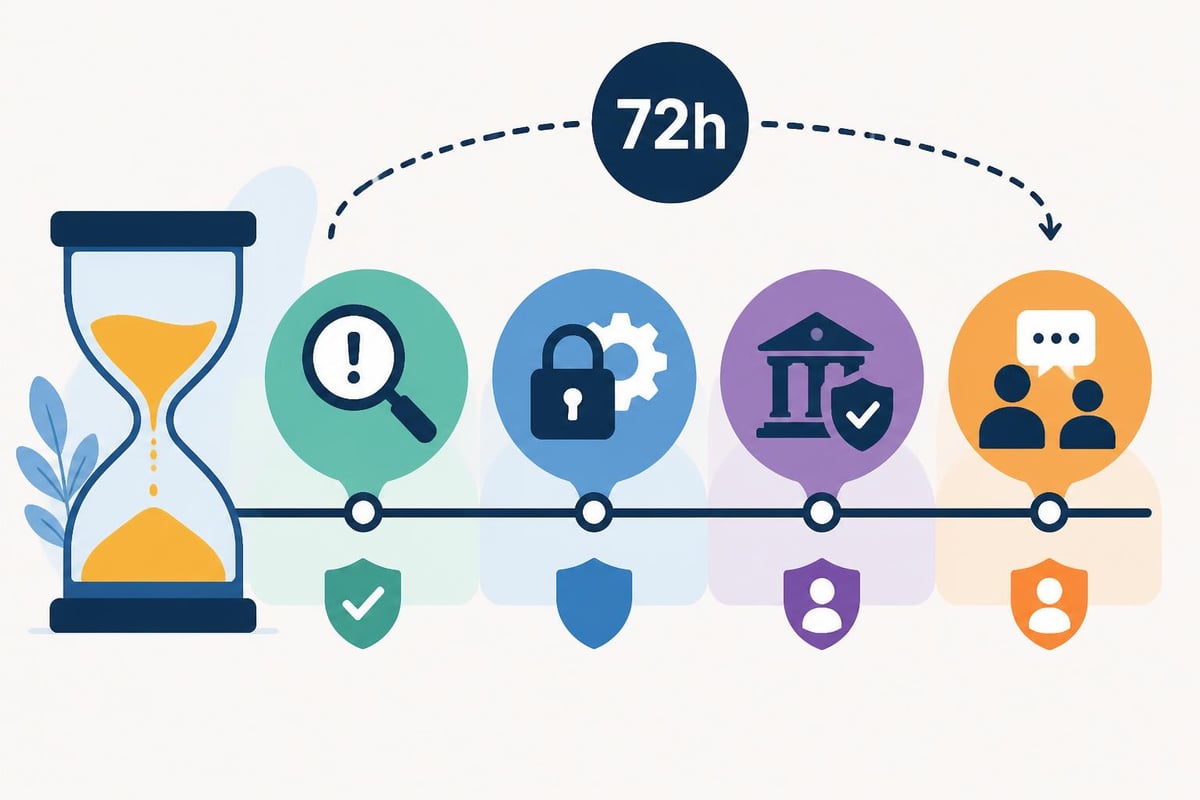
Despite best efforts, data breaches can occur. Your gdpr compliant software should include incident response capabilities:
- Automatic detection of unusual access patterns or data exports
- Breach notification workflows guiding you through required communications
- Containment features allowing immediate restriction of compromised accounts
- Forensic logging preserving evidence for post-incident analysis
The 72-hour breach notification requirement means having clear procedures and communication templates prepared in advance. Software that streamlines these processes ensures you meet regulatory deadlines while managing the operational impact.
Adapting to Regulatory Changes
Privacy regulations continue evolving globally. California's CPRA, Brazil's LGPD, and similar laws in other jurisdictions create an increasingly complex compliance landscape.
Forward-thinking gdpr compliant software vendors regularly update their platforms to accommodate new requirements. Look for providers with track records of proactive compliance updates rather than reactive responses to regulatory changes.
Continuous monitoring and regular audits help identify when new regulations impact your operations, allowing timely adjustments to policies and procedures.
Industry-Specific Compliance Considerations
Martial arts academies face unique challenges that generic compliance software might not address adequately.
Health and Safety Data
Many students disclose medical conditions, injuries, or physical limitations affecting their training. This health-related information receives enhanced protection under GDPR as "special category data" requiring explicit consent and additional security measures.
Your gdpr compliant software should segregate health information from general membership data, applying stricter access controls. Only instructors directly supervising a student with disclosed conditions need access to that information, not all staff members.
Video and Photographic Records
Many academies record training sessions for technique review or create promotional content featuring students. These images and videos constitute personal data under GDPR.
Consent management for visual media requires granular controls. A parent might consent to their child being photographed during kickboxing classes for internal review but object to images being used in social media marketing.
Software supporting separate consent categories for different uses prevents inadvertent violations. Some platforms allow students to "opt out" of photography days or automatically blur faces of non-consenting individuals in group photos.
Financial Transaction Records
Automated billing systems process sensitive payment information subject to both GDPR and payment card industry (PCI-DSS) standards. Your software must maintain strict separation between payment processing and other operational data.
Tokenization replaces actual card numbers with randomly generated tokens, allowing you to process recurring payments without storing sensitive financial data. This approach significantly reduces compliance scope and security risks.
Retention policies for financial records must balance GDPR's data minimization principle against tax and accounting requirements mandating multi-year retention of transaction records.
Cost-Benefit Analysis of Compliance Investment
Implementing gdpr compliant software requires financial investment, but the costs of non-compliance far exceed implementation expenses.
Direct Compliance Costs
- Software licensing fees: Typically range from $50 to $300 monthly depending on academy size
- Implementation services: Professional setup and data migration average $1,000 to $5,000
- Training expenses: Staff education and policy development consume 20-40 hours
- Ongoing maintenance: Updates, audits, and compliance monitoring require dedicated time
For construction firms managing compliance across sectors, solutions like BPA Bouwplaatsautomatisering demonstrate how specialized software streamlines processes across industries, similar to how martial arts management platforms address academy-specific needs.
Risk Mitigation Value
Regulatory fines pose the most obvious financial risk. Even smaller violations can trigger penalties of €10 million or 2% of annual revenue. A mid-sized academy with €500,000 annual revenue faces potential fines of €10,000 for first-time violations.
Reputational damage from data breaches can prove more costly than direct fines. Parents entrust academies with their children's safety and information. A publicized data breach undermines that trust, potentially causing membership cancellations and damaging your academy's reputation for years.
Operational efficiency gains offset compliance costs. Automated processes reduce administrative burden, allowing staff to focus on student experience rather than manual data management. Many academies report 5-10 hours weekly saved through automation after implementing comprehensive management software.
Leveraging AI and Automation for Compliance
Modern gdpr compliant software increasingly incorporates artificial intelligence to enhance compliance capabilities.
Intelligent Data Classification
AI-powered systems automatically identify and categorize personal data as it enters your systems. When processing enrollment forms, machine learning algorithms recognize fields containing special category data requiring enhanced protection.
Pattern recognition detects when staff collect unnecessary information, flagging potential data minimization violations before they occur. If someone creates a custom field requesting students' religious affiliations without valid justification, the system can alert administrators.
Tools similar to RankPill demonstrate how AI automation transforms manual processes. While RankPill focuses on SEO content creation, the underlying principle of intelligent automation applies equally to compliance management, reducing human error while improving consistency.
Predictive Compliance Monitoring
Advanced analytics identify compliance risks before they materialize. Systems analyze access patterns, detecting when user behavior deviates from normal parameters that might indicate unauthorized data access or potential breaches.
Anomaly detection alerts administrators when someone exports unusually large datasets, accesses records outside their normal scope, or logs in from unexpected locations. These early warnings allow intervention before minor issues escalate into reportable incidents.
Automated Subject Rights Fulfillment
Processing data subject requests manually consumes significant time and introduces error risks. AI-enhanced gdpr compliant software automates much of this workflow:
- Request intake: Self-service portals allow students to submit requests directly
- Identity verification: Multi-factor authentication confirms requester identity
- Data compilation: Systems automatically gather all information related to the individual
- Review and redaction: AI flags information requiring manual review before disclosure
- Delivery: Automated systems provide data in requested formats within required timeframes
This automation reduces fulfillment time from days to hours while ensuring consistent, compliant responses.
Protecting student data through gdpr compliant software has evolved from optional best practice to essential requirement for martial arts academies operating in 2026. By selecting platforms with comprehensive compliance features, implementing robust policies, and maintaining ongoing vigilance, academy owners safeguard both their students and their businesses while streamlining operations. MatSync is built with GDPR in mind, with data hosted in EU data centers and encrypted in transit and at rest, alongside powerful management tools that let you focus on what matters most: delivering exceptional training experiences.
Article written using RankPill.