How to Make a Class Schedule for Your Martial Arts Academy
Learn how to make a class schedule for your martial arts academy. Expert tips on optimization, instructor allocation, and student retention.
- By
- RankPill
- Published
- June 30, 2026
- Reading time
- 11 min read

Managing a successful martial arts academy requires more than just teaching skills and student enthusiasm. The foundation of operational efficiency lies in creating a well-structured class schedule that balances instructor availability, student demand, facility capacity, and revenue potential. When academy owners make a class schedule strategically, they create a framework that supports growth, maximizes attendance, and provides clear expectations for both staff and students. The scheduling process involves multiple considerations, from peak attendance times to skill level distribution, making it one of the most critical administrative tasks for martial arts school management.
Understanding the Core Components of Class Scheduling
When you set out to make a class schedule for your martial arts academy, you must first identify the essential elements that will shape your weekly structure. These components work together to create a cohesive system that serves your business goals while meeting student needs.
Discipline and Program Organization
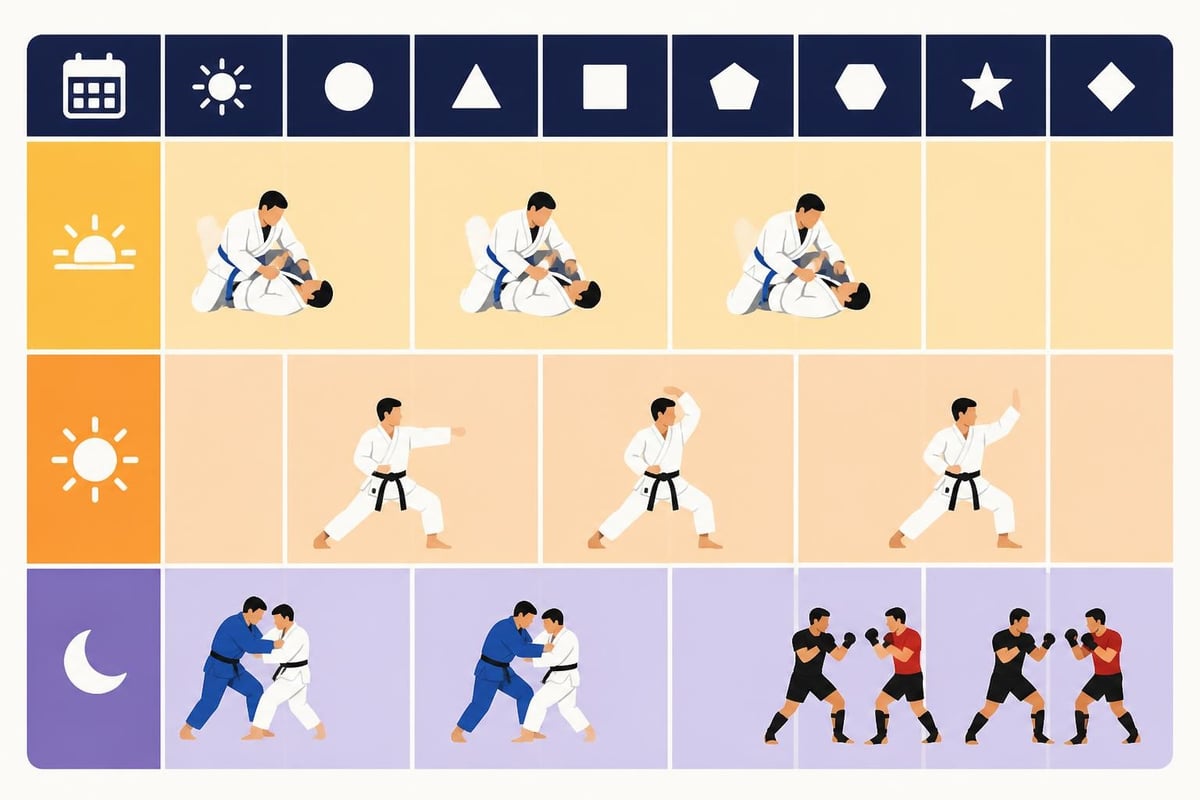
Your academy likely offers multiple martial arts disciplines, each requiring dedicated time slots. Whether you specialize in Brazilian Jiu-Jitsu, Karate, Judo, MMA, or a combination of programs, each discipline demands appropriate scheduling consideration. Brazilian Jiu-Jitsu programs, for example, often benefit from frequent class offerings due to the technique-heavy nature of training, while MMA programs might integrate multiple disciplines into single sessions.
Consider these program-specific factors:
- Beginner classes requiring longer instruction periods
- Advanced sessions focusing on sparring and competition preparation
- Kids' programs scheduled around school hours
- Adult classes timed for before-work and after-work availability
- Weekend workshops and specialty training sessions
The distribution of disciplines across your weekly schedule directly impacts student retention and satisfaction. Understanding capacity management principles helps ensure you allocate sufficient time and space for each program.
Instructor Availability and Assignment
Your instructors represent your academy's most valuable resource. When you make a class schedule, instructor availability becomes a critical constraint that shapes your entire planning process. Each instructor brings unique expertise, teaching styles, and availability windows that must align with class offerings.
| Scheduling Consideration | Impact on Class Placement | Solution Strategy |
|---|---|---|
| Full-time vs. part-time instructors | Flexibility in prime time slots | Prioritize experienced instructors for peak hours |
| Specialized skill sets | Discipline-specific assignments | Match instructor expertise to program requirements |
| Teaching load limits | Maximum weekly hours per instructor | Distribute classes to prevent burnout |
| Preparation time needs | Buffer periods between classes | Build 15-30 minute transitions into schedule |
Universities have developed sophisticated class scheduling procedures that balance instructor preferences with institutional needs, principles that translate well to martial arts academies.
Facility Space and Equipment Constraints
Physical limitations significantly influence how you structure your class offerings. Mat space, changing rooms, equipment availability, and safety considerations all factor into the scheduling equation. A 2,000-square-foot training area might comfortably accommodate 20 students for grappling but only 15 for striking arts that require greater spacing.
Strategic Scheduling for Maximum Student Retention
The timing and frequency of classes directly impact student attendance patterns and long-term retention. When you make a class schedule with student convenience as a priority, you reduce barriers to consistent training.
Peak Time Identification
Analyzing attendance data reveals when your students are most likely to attend. For most martial arts academies, peak periods cluster around specific windows throughout the day and week.
Typical high-attendance periods include:
- Early morning sessions (5:30 AM - 7:00 AM) for working professionals
- After-school hours (3:30 PM - 6:00 PM) for youth programs
- Evening slots (6:00 PM - 8:30 PM) for adult recreational students
- Weekend mornings (9:00 AM - 12:00 PM) for families and intensive training
Educational institutions emphasize best practices for class scheduling that optimize location and timing considerations, which martial arts academies can adapt to their specific contexts.
Skill Level Segmentation
Effective scheduling separates students by experience level to ensure appropriate instruction and safe training environments. When beginners train separately from advanced students, instructors can focus on fundamentals without holding back experienced practitioners. This segmentation also creates clear progression pathways that motivate students to advance through your program ranks.
Your schedule should include dedicated beginner-only sessions at accessible times, intermediate classes that bridge skill gaps, and advanced training for competitive students and those pursuing instructor certification. Tracking student data helps identify which students should transition between skill levels and when schedule adjustments might be necessary.
Building Your Schedule Framework
The actual process to make a class schedule requires systematic planning and iterative refinement. Start with your constraints and build outward toward an optimal solution.
Step-by-Step Schedule Construction
Creating a functional class schedule follows a logical progression that accounts for all variables while maintaining flexibility for adjustments.
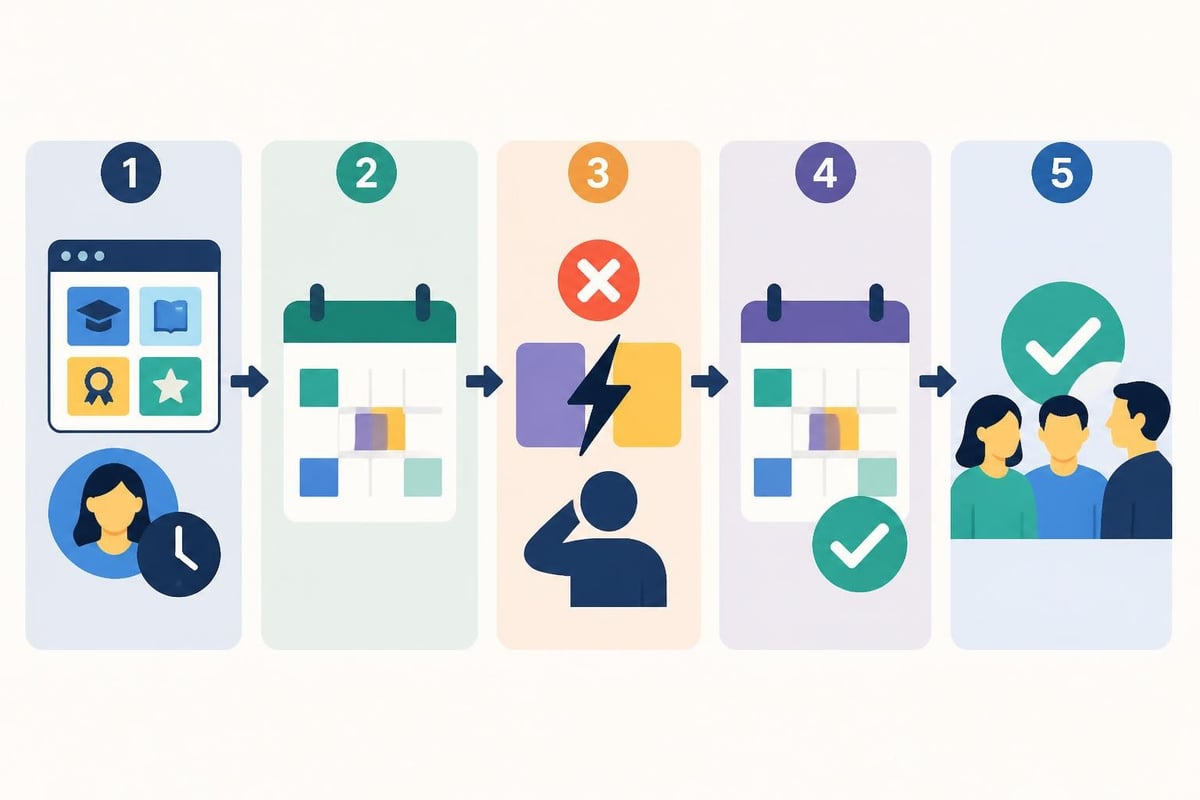
Follow this systematic approach:
- List all programs and disciplines you offer, including class duration requirements
- Document instructor availability with specific days, times, and maximum teaching hours
- Identify facility limitations including mat space, changing room capacity, and equipment
- Plot peak attendance windows based on historical data or market research
- Assign high-priority classes first to secure optimal times for core programs
- Fill secondary time slots with specialty classes, open mat sessions, and workshops
- Build in buffer periods between classes for cleaning, setup, and instructor transitions
- Review for conflicts ensuring no double-booking of instructors or space
- Validate against business goals confirming revenue targets and capacity utilization
- Test with stakeholders gathering feedback from instructors and students before finalizing
Modern scheduling tools have made this process more efficient. Schools now use schedule builders that provide real-time planning capabilities, and similar technologies exist for martial arts academies through specialized operations management software.
Template Development and Standardization
Rather than rebuilding schedules from scratch each session, develop standardized templates that reflect your academy's operational patterns. These templates provide consistency while allowing for seasonal adjustments.
| Template Type | Primary Use Case | Customization Areas |
|---|---|---|
| Standard Weekly | Regular semester operation | Special events, testing dates |
| Summer Intensive | Vacation period programs | Extended class times, camp integration |
| Competition Season | Pre-tournament preparation | Additional sparring sessions, strategy classes |
| Holiday Modified | Reduced operations periods | Consolidated class times, limited offerings |
Templates save administrative time and create predictable patterns that students appreciate. When students know that Tuesday evenings always feature advanced BJJ and Saturday mornings offer family classes, they can plan their schedules accordingly.
Optimizing for Revenue and Capacity
A well-constructed schedule doesn't just serve students and instructors; it also drives business performance. Strategic scheduling maximizes revenue per available training hour while maintaining quality instruction.
Class Size and Pricing Strategy
When you make a class schedule, consider how class size affects both student experience and revenue generation. Small group sessions (6-10 students) command premium pricing due to personalized attention, while larger classes (20-30 students) generate volume revenue with reduced per-student margins.
Your schedule should balance these options strategically. Morning classes might run smaller due to limited demand but attract dedicated students willing to pay premium rates. Evening classes can accommodate larger groups, spreading instructor costs across more participants.
Revenue optimization strategies include:
- Premium pricing for specialized workshops scheduled monthly
- High-capacity classes during peak hours to maximize facility utilization
- Private lesson slots integrated into instructor schedules
- Kids' program bundles that encourage multiple weekly attendance
- Competition team training as add-on revenue streams
Dynamic Scheduling and Seasonal Adjustments
Your class schedule shouldn't remain static throughout the year. Successful academies adjust their offerings based on predictable seasonal patterns and emerging student demands.
Summer schedules often shift earlier to accommodate heat and vacation patterns. Fall schedules expand to capture back-to-school momentum and New Year resolution-driven enrollment. Competition seasons warrant additional sparring and technique refinement sessions. Research into automated class scheduling demonstrates how algorithmic approaches can optimize complex scheduling scenarios, though most martial arts academies benefit more from thoughtful manual planning with software support.
Technology Integration for Efficient Schedule Management
Modern martial arts academies leverage technology to streamline the scheduling process and communicate changes effectively to their community. Digital tools eliminate manual administrative burdens and reduce scheduling errors.
Online Schedule Builders and Software Solutions
Instead of working with spreadsheets or paper calendars, many academies now use dedicated scheduling platforms. Online class schedule makers offer templates and customization options, while more sophisticated AI-powered schedule makers can optimize complex scenarios automatically.
For martial arts-specific needs, MatSync provides comprehensive scheduling capabilities integrated with attendance tracking, billing automation, and student progress monitoring. This integration ensures that when you make a class schedule, it connects directly to your operational systems rather than existing as an isolated document.
Real-Time Updates and Student Communication
Schedule changes happen. Instructors get sick, weather events force closures, and special events require temporary modifications. Technology enables instant communication of these changes through automated notifications, mobile app updates, and website synchronization.
Students appreciate transparency and advance notice. When your scheduling system integrates with communication tools, you can announce changes immediately and track which students have been notified. This reduces no-shows, maintains student satisfaction, and protects your academy's reputation for professionalism.

Common Scheduling Mistakes and How to Avoid Them
Even experienced academy owners sometimes struggle with scheduling challenges. Recognizing common pitfalls helps you make a class schedule that functions smoothly from implementation.
Over-Scheduling and Instructor Burnout
The temptation to offer classes at every possible time slot can lead to instructor exhaustion and declining class quality. When instructors teach too many sessions without adequate rest, their energy drops, student experience suffers, and turnover increases.
Warning signs of over-scheduling include:
- Instructors teaching more than 15-20 hours weekly
- Back-to-back classes without transition time
- No scheduled preparation or administrative periods
- Weekend commitments that eliminate personal time
- Declining class energy and student engagement
Build sustainable schedules that protect instructor wellbeing. Universities follow detailed class scheduling workflows that account for teaching load limits, principles that apply equally to martial arts instruction.
Ignoring Student Feedback and Attendance Patterns
Your schedule should evolve based on actual student behavior rather than assumptions. A Thursday morning class that consistently draws only three participants represents inefficient resource allocation, regardless of how convenient you believe the timing should be.
Regular schedule reviews should examine attendance data, student feedback surveys, and enrollment trends. Classes that underperform might need time changes, format adjustments, or replacement with different offerings. This data-driven approach ensures your schedule aligns with demonstrated demand rather than theoretical preferences.
Insufficient Buffer and Transition Time
Rushing students out while the next class waits creates stress and diminishes the training experience. When you make a class schedule, build adequate transition periods between sessions. Fifteen to thirty minutes allows for:
- Student questions and brief one-on-one coaching
- Mat cleaning and equipment reset
- Instructor mental preparation for the next session
- Student arrival and warm-up for the incoming class
- Overlap periods for announcements affecting both groups
These buffer periods also accommodate classes that run slightly long due to important instruction moments or technique refinement needs.
Long-Term Schedule Planning and Iteration
Your initial schedule represents a starting point, not a final solution. Continuous improvement through systematic evaluation and adjustment creates increasingly effective class structures over time.
Quarterly Review Cycles
Establish regular schedule review periods every three months. These reviews should analyze attendance data, revenue performance, instructor feedback, and student satisfaction metrics. Compare actual results against your planning assumptions and identify gaps or opportunities.
During reviews, ask critical questions: Which classes consistently exceed capacity? Where do you see declining attendance? Are certain skill levels underserved? Do instructor assignments align with their strengths? Has student demand shifted toward different training times?
Scenario Planning for Growth
As your academy expands, your schedule must evolve to accommodate additional students, instructors, and programs. When you make a class schedule with growth in mind, you create pathways for expansion without completely disrupting existing operations.
Plan for scenarios including a 25% enrollment increase, adding a new instructor, launching a new discipline, or opening additional training space. Understanding how these changes would impact your schedule helps you respond quickly when growth opportunities arise.
Effective schedule management forms the backbone of successful martial arts academy operations, balancing student needs, instructor capacity, and business objectives into a cohesive weekly framework. By approaching scheduling strategically and leveraging data-driven insights, you create an environment where students thrive, instructors remain energized, and your academy achieves sustainable growth. MatSync simplifies this complex process by integrating scheduling with attendance tracking, automated billing, and progress monitoring, providing martial arts academy owners with comprehensive tools to optimize operations and enhance student experiences.